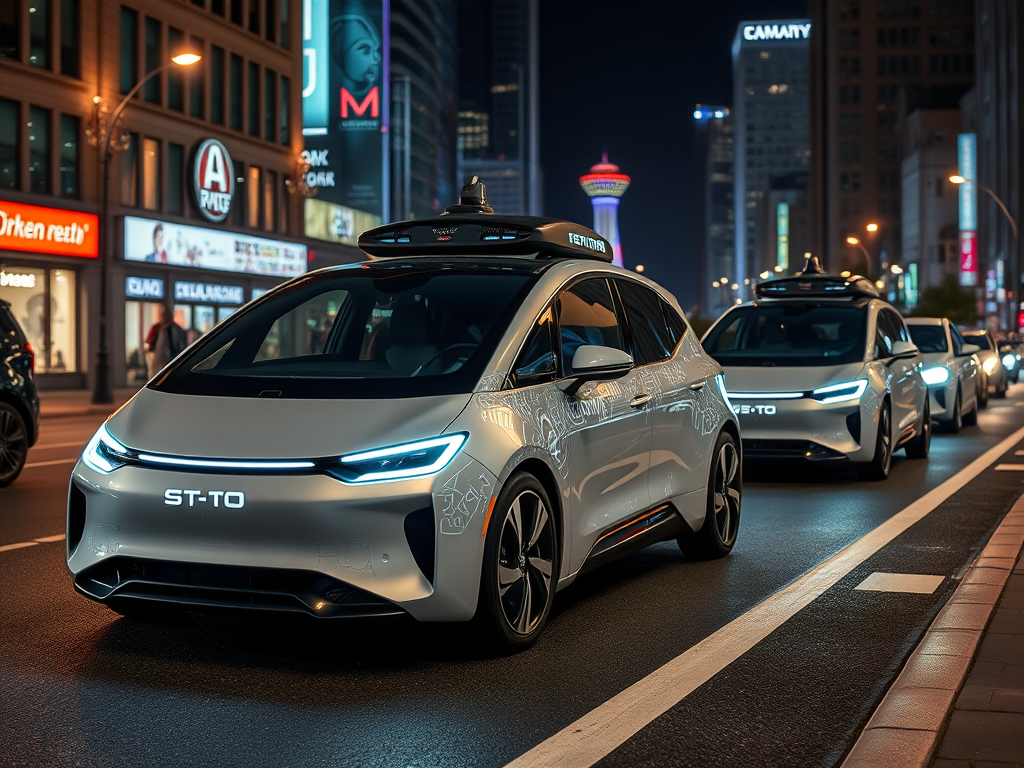
The autonomous vehicle (AV) landscape in the United States is constantly evolving, and late 2024 into 2025 has been a particularly interesting period! From major expansions to regulatory shifts and ongoing debates, let’s zoom in on what’s making headlines.
Waymo’s Big Wins & Expansions! 🎉
Alphabet’s Waymo is absolutely on a roll! The big news is their regulatory approval to significantly expand their driverless ride-hailing service. This means more robotaxis hitting the streets in key California cities.
- San Jose, Here We Come! 🌉 Starting August 2025, San Jose residents will be able to hail fully autonomous rides through the Waymo app, making it their third major market in California, building on existing operations in San Francisco and Los Angeles.
- Austin & Beyond! 🤠 Waymo has also continued to expand its service area in Austin, Texas, now covering a wider swathe of the city. They are also active in Phoenix and Atlanta, with plans to expand to Miami, Florida, and Washington, D.C., next year. Their all-electric Jaguar I-PACE fleet is becoming a more common sight!
- NHTSA Probe Closed! A significant win for Waymo was the closure of the NHTSA’s probe into minor collisions involving their fleet. The investigation concluded that the incidents, mostly low-speed fender-benders, did not indicate a fundamental flaw in Waymo’s technology, a huge vote of confidence for their safety protocols. 🛡️
Tesla’s Robotaxi Teases & Regulatory Tangles 🚦
Tesla, always a headline-grabber, has been making waves with its robotaxi ambitions, though not without some friction:
- San Francisco Robotaxi Launch (with a twist)! 🚕 Elon Musk has spoken about launching a robotaxi service in San Francisco. However, state regulators, particularly the California Public Utilities Commission (CPUC), are highlighting that Tesla does not yet have the necessary permits for fully autonomous operations with the public, even with a safety driver. It appears Tesla’s initial rollout might involve human-assisted rides for select users as they navigate the complex regulatory waters. 🧑⚖️
- “FSD Unsupervised” Rolling Out? Tesla claims its “Full Self-Driving (FSD) Unsupervised” feature will soon be available to all Tesla owners, starting with newer vehicles in select U.S. cities by late 2025. This, however, comes amid ongoing legal scrutiny and a lawsuit from the California Department of Motor Vehicles (DMV) alleging that Tesla has misled drivers about the capabilities of its Autopilot and FSD features. 🤔
Federal and State Policy Shifts 📄
Regulators are keeping pace, albeit cautiously, with the rapid advancements:
- NHTSA’s New AV Framework (April 2025): The National Highway Traffic Safety Administration (NHTSA) announced a new Automated Vehicle (AV) Framework. This framework aims to prioritize safety, unleash innovation by removing unnecessary regulatory barriers, and enable commercial deployment of AVs. Key changes include streamlining crash reporting requirements for AVs and expanding the Automated Vehicle Exemption Program to include domestically produced vehicles for research and demonstration.
- “Autonomous Vehicle Acceleration Act of 2025” in Senate: A bill (S.1798) introduced in the Senate in May 2025 aims to prescribe standards for autonomous vehicles, promote U.S. leadership, and identify ways to lower practical and regulatory barriers for Level 4 and Level 5 AV deployment. This signals increasing federal attention on establishing a clearer path for AVs.
- State-Level Cautious Expansion: While some states like Arizona and Texas have historically been more permissive, even cities like Boston are now seeing Waymo begin mapping initiatives, sparking local conversations about preparing for driverless technology’s impact, including concerns about job displacement for traditional drivers. 😟
Safety & The Road Ahead 📊
Safety remains paramount. While self-driving car crashes, particularly minor ones, have seen an increase as more AVs hit the road, companies like Waymo continue to report significantly fewer serious injury or airbag deployment crashes compared to human drivers. However, constant vigilance, rigorous testing, and clear regulatory frameworks are crucial for building public trust.
The journey to widespread autonomous transportation is a marathon, not a sprint. But with these latest developments, it’s clear the USA is accelerating its efforts, inching closer to a future where driving is less about the human hand on the wheel and more about intelligent systems guiding us safely to our destinations. 🌟
What are your predictions for self-driving cars in the next few years? Let us know in the comments! 👇

Leave a comment