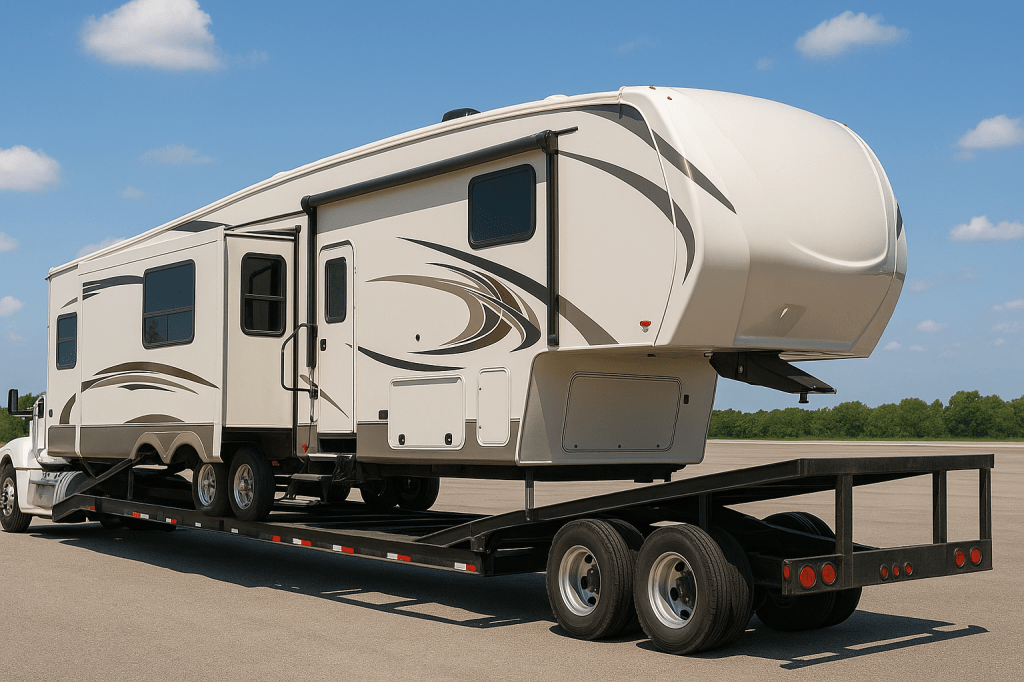
So, you’ve invested in the ultimate mobile getaway – a beautiful fifth-wheel RV! Whether you’re upgrading, moving cross-country, or bought one that needs to be brought to your dream campsite, the question often arises: how do you get this magnificent beast from point A to point B? While many proud owners tow their own, there’s a thriving industry dedicated to fifth-wheel transportation, offering convenience, expertise, and peace of mind. Let’s hitch up and explore!
Why Professional Fifth Wheel Transport? 🤔
Towing a fifth wheel isn’t just about having a pickup truck with a hitch. These RVs are substantial, often ranging from 20 to over 40 feet in length and weighing thousands of pounds. Here’s why many opt for professional transport:
- No Tow Vehicle? No Problem! 🚚 You might not own a truck capable of safely towing a large fifth wheel, or perhaps you prefer not to put the wear and tear on your personal vehicle for a long haul. Professional transport companies have heavy-duty trucks specifically equipped for the job.
- Expertise and Experience: Driving with a fifth wheel, especially a big one, requires a specific skill set. Professional drivers are experienced in navigating various road conditions, understanding weight distribution, and handling potential emergencies. They know the ins and outs of large vehicle dynamics.
- Time Savings: Planning a cross-country RV trip can take weeks or even months. If you need your fifth wheel moved quickly for a job, a seasonal move, or a new adventure, a transporter can often get it there much faster. ⏱️
- Avoiding Wear and Tear: Even if you have a capable truck, a long tow puts significant strain on your engine, transmission, and tires. Letting a professional handle it saves your truck for your leisure travels.
- Navigating Regulations: Each state has different regulations regarding RV length, width, height, and required safety equipment (like breakaway switches and specific brake requirements). Professional transport companies are well-versed in these varied laws and secure necessary permits for oversized loads. 📋
How Fifth Wheel Transport Works 🛠️
When you engage a professional fifth wheel transport service, here’s a general idea of what to expect:
- Get a Quote: You’ll typically provide details about your fifth wheel (make, model, dimensions, weight, condition) and the pickup/delivery locations. Companies like Heavy Haulers and Camper Haulers specialize in this.
- Choosing the Right Method:
- Tow-Away Service: This is the most common and often most cost-effective method. The transporter uses their specialized truck to hitch up your fifth wheel and tow it directly. Your RV’s wheels are on the ground during transit.
- Flatbed/Step-Deck Transport: For extremely large, heavy, or inoperable fifth wheels, or if you prefer maximum protection, your RV can be loaded onto a flatbed or step-deck trailer. This method is more expensive but ensures the RV’s tires and axles aren’t accumulating mileage or wear during the journey.
- Preparation is Key: Before pickup, you’ll generally need to:
- Remove Personal Items: Secure or remove all loose items inside the RV.
- Close and Latch Everything: Ensure all cabinets, drawers, doors, and windows are securely closed and latched.
- Disconnect Utilities: Turn off propane, disconnect water hoses, and secure power cords.
- Check Tires: Ensure your RV’s tires are properly inflated and in good condition if it’s being towed.
- Provide Information: Have your RV’s registration, title, and any special instructions ready for the driver.
- The Journey: Your chosen transporter will handle the logistics, including route planning, fuel, and adherence to all state-specific regulations. Many companies offer tracking so you can monitor your fifth wheel’s progress. 🗺️
- Delivery and Inspection: Upon arrival, you’ll inspect your fifth wheel to ensure it arrived in the same condition it was picked up.
Cost Considerations 💸
The cost of transporting a fifth wheel varies widely based on several factors:
- Distance: Longer hauls generally cost more overall, but the per-mile rate often decreases for greater distances. Expect anywhere from $1.00 to $3.50+ per mile.
- Size and Weight: Larger and heavier fifth wheels may require specialized equipment or permits, increasing the cost.
- Transport Method: Flatbed hauling is typically more expensive than tow-away.
- Time of Year/Demand: Peak seasons for RV travel might see higher rates due to demand.
- Fuel Prices: Fluctuations in diesel prices directly impact transport costs.
- Insurance: While reputable carriers include basic insurance, you might consider additional coverage for high-value RVs.
For example, a short 100-mile transport might be around $3.00/mile, whereas a 1000-mile trip could average $1.50/mile. Always get detailed, transparent quotes!
The Bottom Line 🌟
Fifth-wheel transportation services offer a convenient and professional solution for moving your RV when you can’t or prefer not to tow it yourself. By understanding the process, preparing your rig, and choosing a reputable company, you can ensure your home-on-wheels arrives safely and efficiently at its next destination, ready for your next adventure! Happy trails! 🌄

Leave a comment