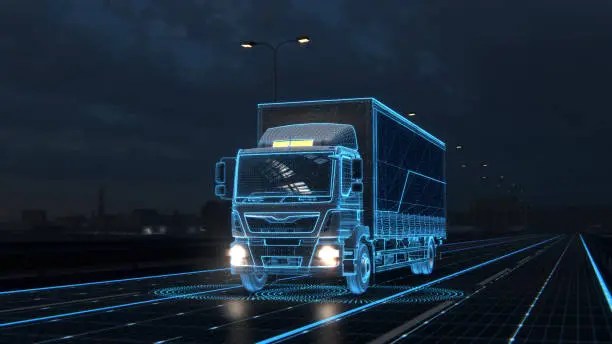
The auto transport industry is not just about moving vehicles; it’s a sector being rapidly reshaped by technology and changing market demands.
- Rise of EVs: The surge in electric vehicle (EV) production and sales is a major factor. The logistics of shipping EVs are more complex due to battery safety regulations and the need for specialized handling, but this is also a growth area for companies that can adapt.
- AI and Automation: Artificial intelligence is being integrated across the auto transport supply chain. This includes AI-powered route and rate optimization to account for weather and port congestion, as well as automated paperwork to streamline customs and documentation.
- Digital Documentation: Traditional paperwork is becoming a thing of the past. Blockchain-anchored bills of lading and digital titles are becoming the new standard for secure, hack-proof documentation, which speeds up port clearance and reduces errors.
- Sustainability is a Priority: Environmental responsibility is no longer optional. The industry is seeing more green initiatives, from eco-friendly transport vehicles to route planning that reduces emissions.
Autonomous Highway Trucking: From Concept to Reality
Autonomous trucking is not a distant vision but a present-day reality, albeit one that is still in its early stages of widespread deployment.
- Hub-to-Hub Model: The most promising application for autonomous trucking in 2025 is the “hub-to-hub” model. This involves driverless trucks handling the long-haul, predictable highway portions of a route, while human drivers manage the “first and last mile” logistics in more complex urban environments. This model capitalizes on the strengths of autonomous technology on highways, where the driving environment is more straightforward.
- Technology is Maturing: The technology for autonomous trucks is becoming more sophisticated. Advancements in LiDAR, radar, and advanced cameras, combined with AI-driven data processing, are enabling trucks to perceive their surroundings with near-human accuracy.
- Addressing the Driver Shortage: The trucking industry faces a severe driver shortage, which is expected to worsen. Autonomous trucks are seen as a compelling solution to this problem, offering the potential to operate around the clock without hours-of-service restrictions, which can significantly increase efficiency.
- Safety and Regulation: Autonomous vehicles are statistically safer per mile driven than human-operated ones, as they eliminate human error caused by fatigue, distraction, or impairment. However, regulatory frameworks are still catching up to the technology, and establishing liability in the event of an accident remains a challenge.
The Interplay Between Auto Transport and Autonomous Trucking
The growth of autonomous trucking will directly influence the auto transport industry. As autonomous trucks become more commonplace for long-haul freight, they will be used to transport cars, changing how auto transportation companies operate. This will create new opportunities for efficiency and cost savings, but also require companies to adapt their business models and integrate with these new technologies.

Leave a comment