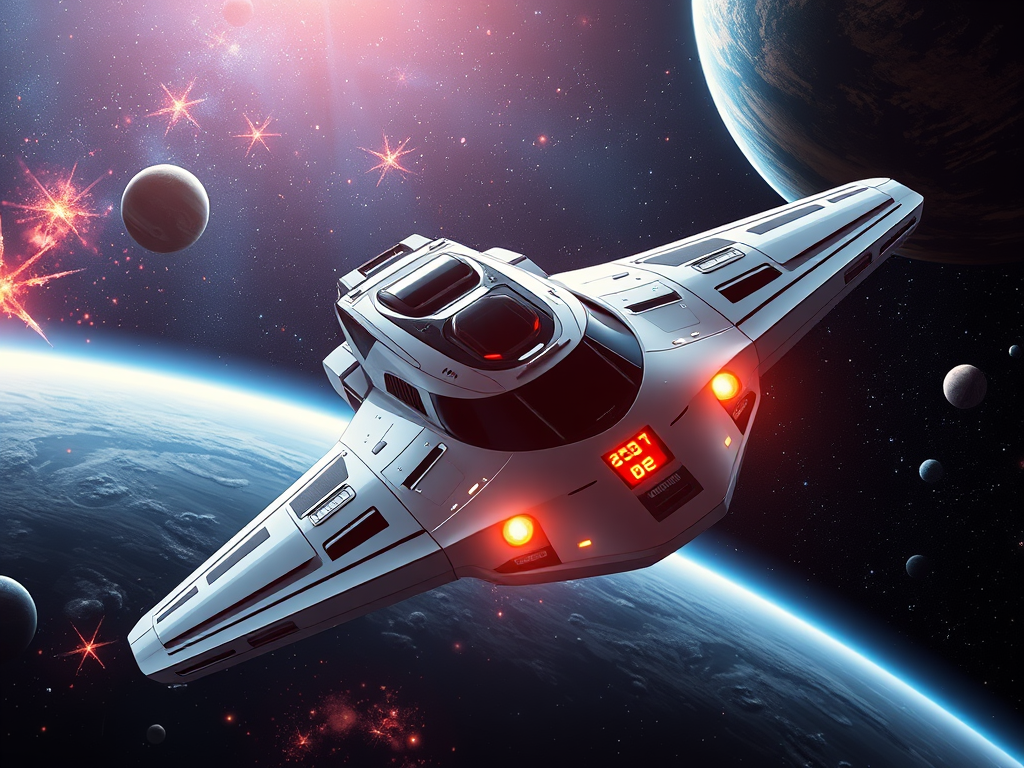
For decades, space travel was the exclusive domain of highly trained government astronauts. Today, it’s a rapidly emerging industry, with private companies turning the dream of space tourism into a reality. While still a luxury for the ultra-wealthy, the advent of commercial spaceflight is opening up a new era of exploration and human endeavor.
A New Class of Traveler
Companies like SpaceX, Blue Origin, and Virgin Galactic are leading the charge, offering different types of space experiences.
- Suborbital Flights: These trips, offered by companies like Blue Origin and Virgin Galactic, take passengers to the edge of space, allowing them to experience a few minutes of weightlessness and see the curvature of the Earth against the blackness of space before returning home.
- Orbital and Beyond: For a longer, more comprehensive journey, companies like SpaceX are providing flights that take private crews to low Earth orbit, with some even visiting the International Space Station. There are also ambitious plans for lunar and even Martian tourism on the horizon.
The Technology That Makes It Possible
The space tourism industry is built on groundbreaking technological advancements that have drastically reduced the cost and risk of spaceflight.
- Reusable Rockets: The most significant breakthrough is the development of reusable rockets, pioneered by SpaceX. By designing rockets that can land safely after launch, companies can dramatically cut down on manufacturing costs and increase launch frequency, making space travel more economically viable.
- Advanced Propulsion Systems: The future of space travel relies on more efficient propulsion. While traditional chemical rockets are the standard, companies are exploring advanced ion propulsion and even nuclear thermal systems to shorten transit times for deep-space missions.
- Spacecraft Engineering: Modern spacecraft are designed with both safety and comfort in mind. From the large, panoramic windows on Blue Origin’s New Shepard to the advanced life support systems on SpaceX’s Crew Dragon, these vehicles are built to provide a unique and secure experience for non-astronauts.
The Debate and The Future
As space tourism becomes more common, it sparks important conversations about its economic, ethical, and environmental impact. Critics raise concerns about the high carbon footprint of rocket launches and the potential for a new form of “space debris” as the number of launches increases. However, proponents argue that the industry will drive innovation, create jobs, and inspire a new generation of scientists and engineers.
Regardless of the debates, one thing is clear: we are at the beginning of a new chapter in human history. The ability to travel to space, once a fantasy, is now a tangible reality, with a future that promises to be more accessible and transformative than we ever imagined.

Leave a comment