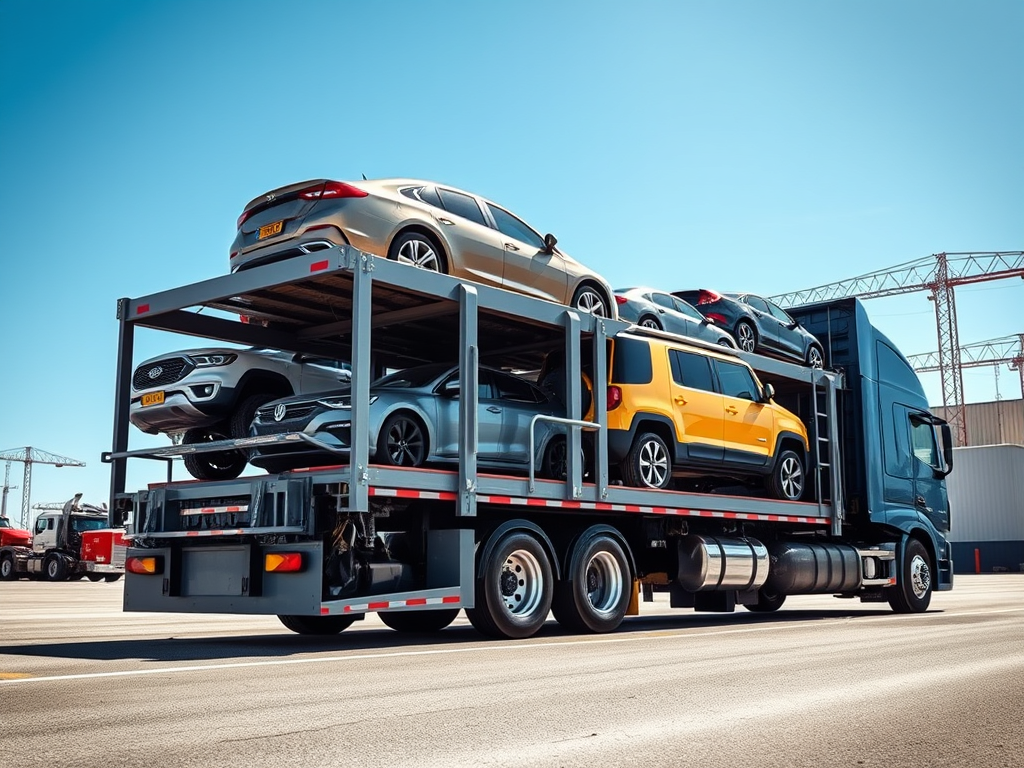
The final leg of a package’s journey, known as “the last mile,” has long been the most expensive and complex part of the logistics chain. It’s a logistical puzzle of urban traffic, unpredictable delivery windows, and high labor costs. But thanks to a wave of innovation, the last mile is finally getting its high-tech makeover, with a new generation of autonomous delivery vehicles poised to change everything.
Beyond the Human Driver: Autonomous Ground Vehicles
From bustling city sidewalks to suburban streets, small, self-driving robots are becoming a more common sight. These ground-based autonomous vehicles (often called “sidewalk robots”) are designed to handle short-distance deliveries, bypassing traffic congestion and offering a cheaper, more efficient alternative to traditional couriers.
- The Technology: These robots navigate their environment using a combination of AI, GPS, and an array of sensors like LiDAR and cameras. They can detect and avoid obstacles, make real-time decisions, and even respond to human interactions, ensuring safe operation in crowded areas.
- Real-World Impact: Companies are deploying these robots for everything from food and grocery delivery to parcel transport on college campuses and in residential communities. They offer 24/7 delivery services and are significantly more cost-effective than human-driven deliveries, addressing the rising challenges of labor shortages and operational expenses.
Taking to the Skies: The Rise of Delivery Drones
For rapid, lightweight deliveries and reaching remote locations, drones are proving to be a game-changer. These unmanned aerial vehicles (UAVs) can bypass traffic, delivering packages from a local hub directly to a customer’s doorstep in a matter of minutes.
- The Technology: Equipped with advanced GPS, sensors, and AI-powered flight control, drones can navigate complex airspace, avoid obstacles, and ensure precise delivery.
- Real-World Impact: While still in the pilot phase in many regions, companies are actively testing and scaling drone delivery services for everything from medical supplies to everyday consumer goods. The technology is particularly valuable for urgent or time-sensitive deliveries where speed is a top priority.
The Ecosystem of Automation
The true power of autonomous delivery lies in the connected ecosystem that supports it. It’s not just about the vehicles themselves but the intelligent systems that run the show.
- AI-Powered Orchestration: AI platforms act as the central “brain” for these autonomous fleets. They optimize delivery routes, manage vehicle charging schedules, and intelligently distribute tasks among robots and drones to ensure maximum efficiency.
- Micro-Fulfillment Centers: To support faster delivery times, companies are establishing small, automated warehouses in urban areas. These “micro-fulfillment centers” act as local hubs where robots can pick, pack, and prepare orders for autonomous vehicles, drastically reducing the last-mile distance.
- The Gig Economy Connection: In a hybrid model, autonomous vehicles can even work alongside human drivers. A self-driving truck might transport a load from a distribution center to a local hub, where a human driver takes over for the final delivery, or a crowd-sourced network of independent contractors can handle deliveries that are not yet suitable for autonomous robots.
This fusion of robotics, AI, and smart logistics is not just a passing trend—it’s the future of how goods move from a warehouse to our hands, promising a new era of efficiency, speed, and sustainability for the entire delivery ecosystem.
Your vehicle deserves the best. Start with our easy QuoteForm here.

Leave a comment