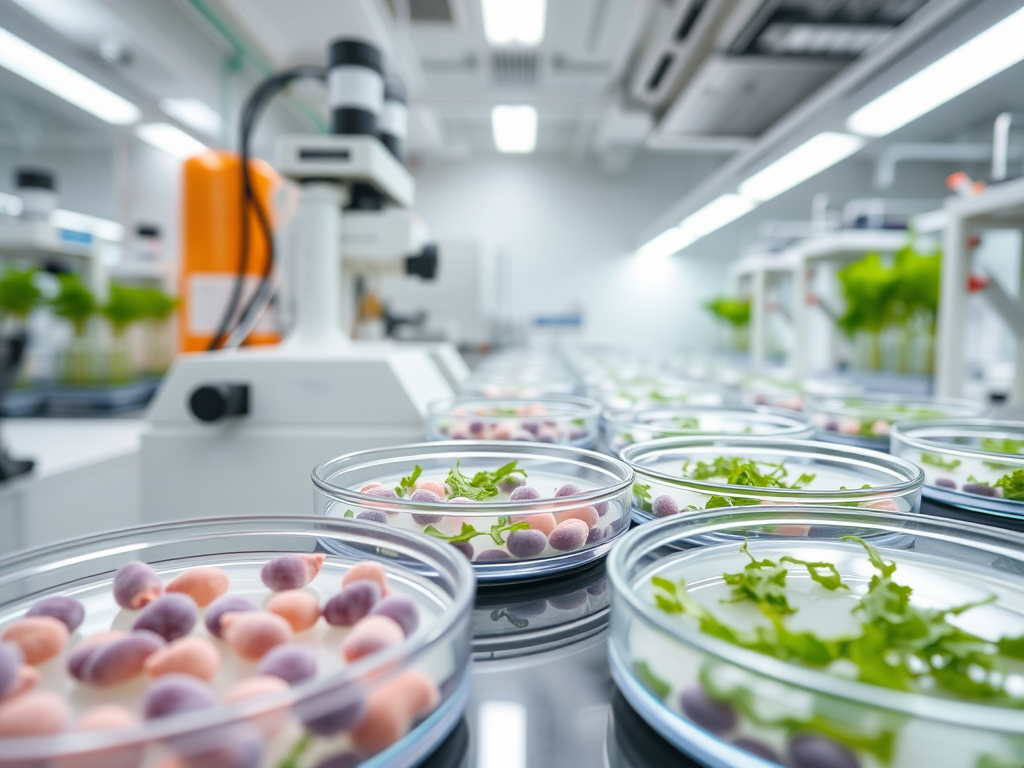
Scaling cellular agriculture to a level that can compete with conventional meat production is a significant challenge with multiple interconnected hurdles. These challenges span technology, economics, regulation, and consumer acceptance.
1. Technological Hurdles
- Bioreactor Design and Volume: The current bioreactors used in cellular agriculture are often adaptations of those from the biopharmaceutical industry. They are designed for low-volume, high-value products, not for the massive scale needed to produce a commodity like meat. To meet even a small fraction of global meat demand, the total bioreactor capacity would need to increase by orders of magnitude, which requires a complete redesign of the equipment.
- Cell Culture Media: The nutrient-rich liquid that feeds the cells is the single most expensive component, accounting for a significant portion of the production cost. Finding affordable, food-grade alternatives to the expensive amino acids and growth factors currently used is a major area of research.
- Scaffolding: For producing whole cuts of meat (like a steak), cells need a structure to grow on. Creating edible, food-safe scaffolds that can mimic the complex structure of muscle and fat tissue and scale up in size is a major technical challenge.
- Cell Detachment: A key part of the process is detaching the cells from the growth medium or scaffolds. Current methods often use costly enzymes that can leave residues in the final product and lead to cell loss, which is highly inefficient for mass production.
2. Economic and Cost Challenges
- High Production Costs: The combination of expensive media, specialized bioreactors, and energy-intensive processes makes cultivated meat prohibitively expensive compared to traditional meat. A significant drop in production costs is necessary for it to become a viable, competitive product for a broad consumer base.
- Capital Investment: Scaling up requires massive investment in infrastructure, including large-scale production facilities and equipment. This high initial capital expenditure is a barrier for many companies.
- Energy Consumption: Cultivated meat production can be very electricity-intensive. The facilities need to maintain precise temperature and sterile conditions, and the bioreactors themselves require significant power. For cultivated meat to be more sustainable than conventional meat, it must be produced using renewable energy sources.
3. Regulatory and Legal Barriers
- Novel Food Status: In many countries, cultivated meat is classified as a “novel food,” requiring a lengthy and complex regulatory approval process before it can be sold. The legal frameworks are still developing, and the time it takes to gain approval can slow down the entire industry.
- Labeling and Terminology: The use of terms like “meat” on cultivated products is a subject of intense debate and legal challenges. Jurisdictions with strong agricultural lobbies may pass legislation that restricts the use of these terms, which can confuse consumers and hinder market entry.
- Varying Standards: The regulatory landscape for cultivated meat is inconsistent across different countries, creating a patchwork of rules that makes it difficult for companies to operate globally.
4. Consumer Acceptance
- The “Unnatural” Perception: A significant portion of consumers express reluctance to try cultivated meat due to the perception that it is “unnatural” or “lab-grown.” This can evoke a sense of disgust or unease and is a major marketing hurdle.
- Taste and Texture: While significant progress has been made, replicating the exact taste, texture, and mouthfeel of conventional meat, especially for whole cuts, remains a challenge.
- Knowledge Gap: Many consumers are still unfamiliar with what cellular agriculture is and how it works. A lack of awareness and understanding can fuel skepticism and food neophobia (the fear of trying new foods).
- Price: As long as cultivated meat remains a premium product, it will be out of reach for most consumers, limiting its market penetration and ability to compete with conventionally produced meat.

Leave a comment