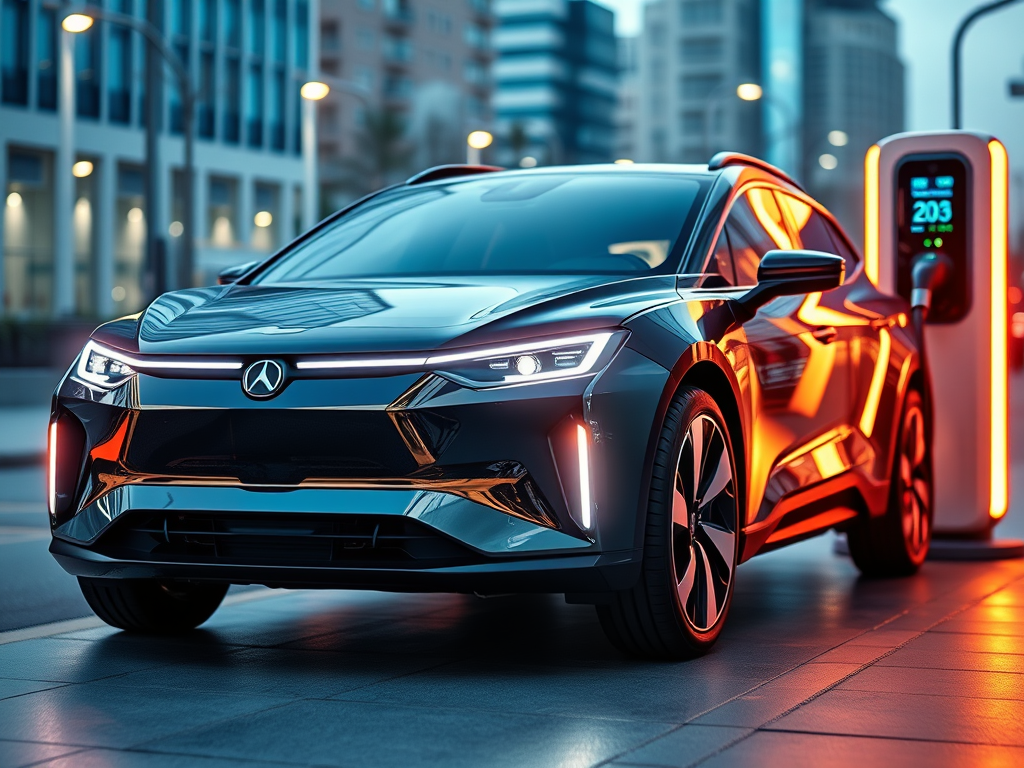
The latest advancements in electric vehicle (EV) technology are focused on improving every aspect of the vehicle, from the power source to the charging experience. The most significant innovations are in battery technology, which directly impacts an EV’s range, cost, and charging time.
1. Battery Technology
- Solid-State Batteries: This is considered the “holy grail” of battery technology. Instead of a liquid or gel electrolyte, solid-state batteries use a solid material to transfer ions between electrodes. This change offers several major benefits:
- Higher Energy Density: They can store significantly more energy in the same space, potentially increasing an EV’s driving range by 50% or more.
- Faster Charging: Less internal resistance allows for ultra-fast charging, with some manufacturers aiming to charge a vehicle in 10-15 minutes.
- Improved Safety: Solid electrolytes are non-flammable, which reduces the risk of battery fires.
- New Battery Chemistries: While solid-state batteries are still in development, other battery chemistries are already being implemented to improve performance and reduce cost.
- Lithium Iron Phosphate (LFP) Batteries: Already in use in many EVs, these batteries are less expensive, more durable, and do not use cobalt, a material with ethical sourcing concerns.
- Sodium-Ion Batteries: These batteries replace lithium with sodium, a far more abundant and cheaper element, making them a sustainable, low-cost alternative.
2. Charging and Power Management
- Ultra-Fast Charging: New battery designs, along with improved thermal management systems, are enabling charging at much higher voltages (e.g., 800-volt architectures). This allows for rapid charging that can add hundreds of miles of range in just a few minutes.
- Wireless Charging: Wireless charging is moving beyond prototypes. Inductive charging pads can be installed in garages or even in the road, allowing EVs to charge without a physical cable. This technology is also being tested for dynamic charging, where a vehicle can charge while driving over specially equipped lanes.
- Vehicle-to-Grid (V2G) Technology: This innovation allows EVs to not only draw power from the grid but also send electricity back. This turns a vehicle into a mobile energy storage unit, which can be used to power a home during an outage or help stabilize the electrical grid during peak demand.
3. Structural and Motor Advancements
- Structural Batteries: Automakers are integrating the battery pack into the vehicle’s chassis, making the battery a structural component. This design improves crash safety, reduces the vehicle’s weight, and frees up interior space.
- New Motor Designs: Engineers are developing new motor designs, such as axial flux motors, which are smaller, more powerful, and have a more compact “pancake” shape, making them easier to integrate into various vehicle types. Researchers are also exploring the use of alternative materials, like carbon-based conductors, to reduce reliance on rare-earth magnets and make motors lighter and more efficient.
The following video discusses how a new type of electric motor can operate without metal coils.
New Electric Motor Runs Without Metal Coils – This will Change the Entire EV Industry!
New Electric Motor Runs Without Metal Coils – This will Change the Entire EV Industry!



Leave a comment