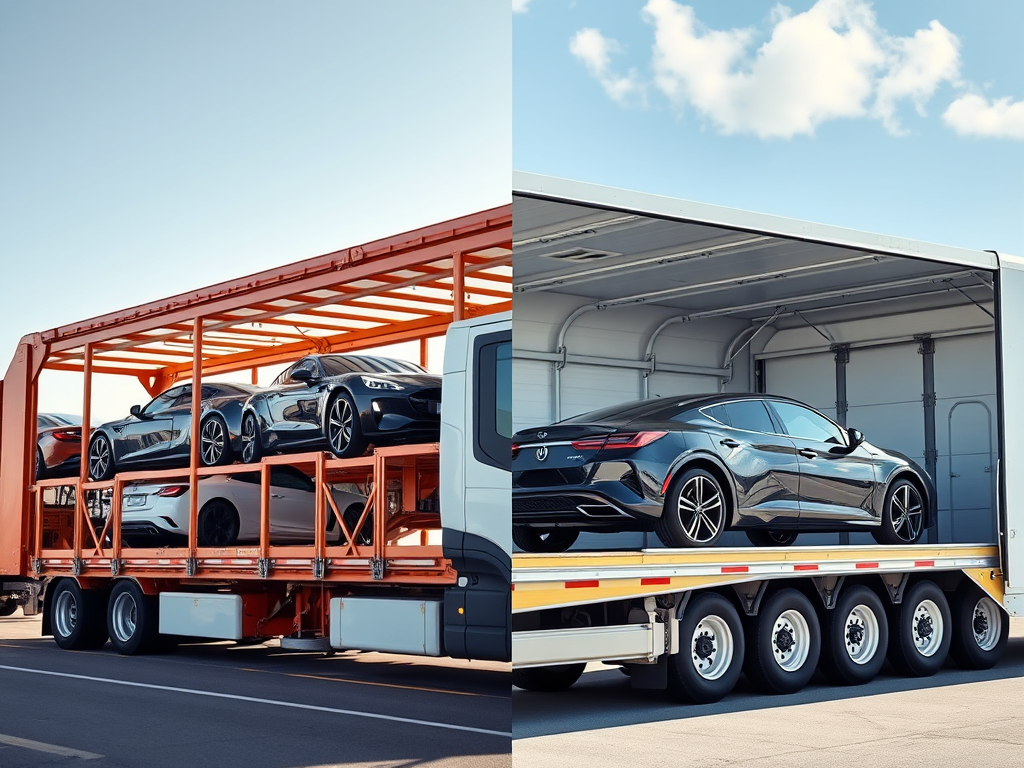
When shipping a vehicle, the two most common methods are open and enclosed transport. The fundamental difference lies in how your car is protected during its journey. Each method has distinct pros and cons related to cost, security, and availability, making the choice dependent on your vehicle’s value and your budget.
Open Transport 🚚
Open transport is the most common and affordable way to ship a car. Your vehicle is loaded onto an open two-level trailer, which can hold between 7 and 10 cars. This is the same type of carrier you see transporting new cars from factories to dealerships.
- Pros:
- Cost-Effective: This is the biggest advantage. Since carriers can transport more vehicles at once, the cost per vehicle is significantly lower.
- Widely Available: There are far more open carriers on the road than enclosed ones, which means more flexibility in scheduling and shorter wait times.
- Faster: Due to greater availability and the ability to load and unload more quickly, open transport can often have faster transit times.
- Cons:
- Exposure to Elements: Your car is exposed to weather conditions (rain, sun, snow), as well as road debris, dirt, and dust. It will likely arrive dirty and may have a higher risk of minor cosmetic damage like rock chips.
- Less Security: While theft is rare, the vehicle is visible to the public, which may be a concern for owners of high-end cars.
Enclosed Transport 📦
Enclosed transport involves shipping your vehicle inside a fully covered trailer with a roof and solid walls. This method provides maximum protection and is often considered a “white-glove” service.
- Pros:
- Maximum Protection: The vehicle is completely shielded from weather, road debris, and dirt. This ensures it arrives in the same condition as when it was picked up.
- Enhanced Security: The vehicle is out of sight, which adds an extra layer of security against theft and vandalism. This is ideal for high-value or sentimental vehicles.
- Specialized Care: Drivers of enclosed carriers are often more experienced in handling valuable cars and may use specialized equipment like soft tie-downs and lift gates, which are safer for low-clearance vehicles.
- Cons:
- Higher Cost: Enclosed transport can be 30% to 60% more expensive than open transport, reflecting the higher operating costs and reduced capacity of the carrier.
- Less Availability: There are fewer enclosed carriers, which can make it more difficult to book on short notice and may lead to longer wait times.
- Slower: The loading and unloading process is more complex, and because a carrier makes fewer stops, the overall transit time can sometimes be longer.
In summary, choose open transport if you are on a budget, shipping a standard daily-driver vehicle, and are not concerned about minor dirt or debris. Choose enclosed transport if you are shipping a luxury, classic, or specialty car and are willing to pay a premium for peace of mind and maximum protection.

Leave a comment