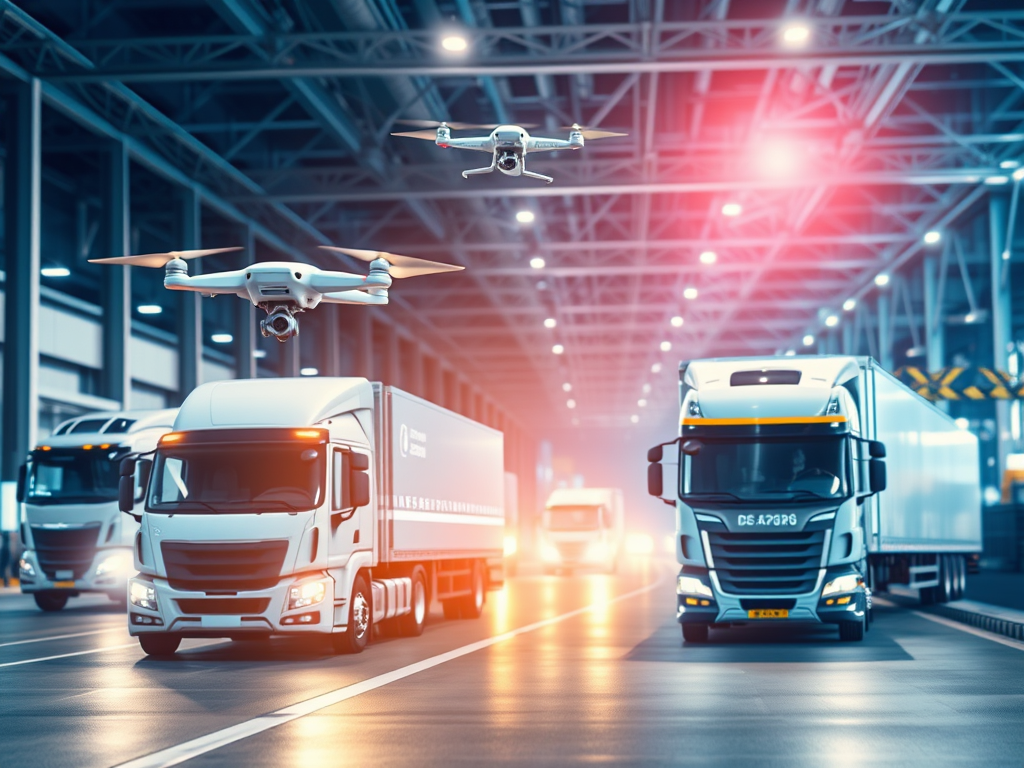
The wheels of the logistics industry are turning faster than ever, driven by a powerful engine of technological innovation. From the moment an item is ordered to the second it arrives at a customer’s door, technology is revolutionizing every step of the journey, making the process more intelligent, efficient, and transparent.
The AI-Powered Control Tower
Logistics is now a data-driven science. Companies are moving beyond simple tracking to using AI-powered predictive analytics that act as a central “control tower.” This technology can analyze vast datasets—from traffic patterns and weather forecasts to historical demand and fleet performance—to anticipate disruptions before they happen. This allows for proactive decision-making, such as rerouting shipments to avoid delays or adjusting inventory levels to meet unexpected demand spikes. The result is a more resilient and responsive supply chain that can navigate a complex and unpredictable world.
The Automated Fleet: From Warehouse to Highway
Automation is no longer a futuristic concept; it’s a reality in modern logistics. In warehouses, autonomous mobile robots (AMRs) and sorting systems are dramatically increasing efficiency by automating tasks like picking, packing, and moving goods. On the road, autonomous vehicles are set to transform long-haul transport. While fully self-driving trucks are still in development, companies are already using systems that assist drivers, improving safety and fuel efficiency. For the final leg of the journey, drones and delivery robots are being tested for last-mile delivery, offering a solution to urban congestion and the high cost of getting a package to its final destination.
IoT and Blockchain: The Twin Pillars of Visibility
To create a truly smart supply chain, you need real-time data and complete trust. This is where the Internet of Things (IoT) and blockchain come in.
- The Internet of Things (IoT): Tiny, connected sensors on pallets, containers, and vehicles provide a constant stream of real-time data. This allows businesses to monitor a shipment’s location, temperature, and even vibrations. If a refrigerated truck’s temperature rises, for instance, a notification can be sent immediately, preventing spoiled goods.
- Blockchain: This technology creates a secure, decentralized digital ledger of every transaction and movement in the supply chain. Every participant—from the factory to the customer—can access a single source of truth. This eliminates disputes, reduces fraud, and provides a level of transparency that was previously impossible.
The Green Shift: Sustainable Logistics
Technology is also at the forefront of the industry’s push for sustainability. AI-driven route optimization isn’t just about speed; it’s about minimizing fuel consumption and carbon emissions. The transition to electric and hydrogen-powered trucks is gaining momentum, with data analytics being used to manage charging infrastructure and optimize vehicle performance. By embracing these technologies, logistics companies are not only becoming more efficient but also contributing to a healthier planet.
The convergence of these technologies is creating a new era of logistics—one where the supply chain is no longer a linear process but a dynamic, interconnected network.

Leave a comment