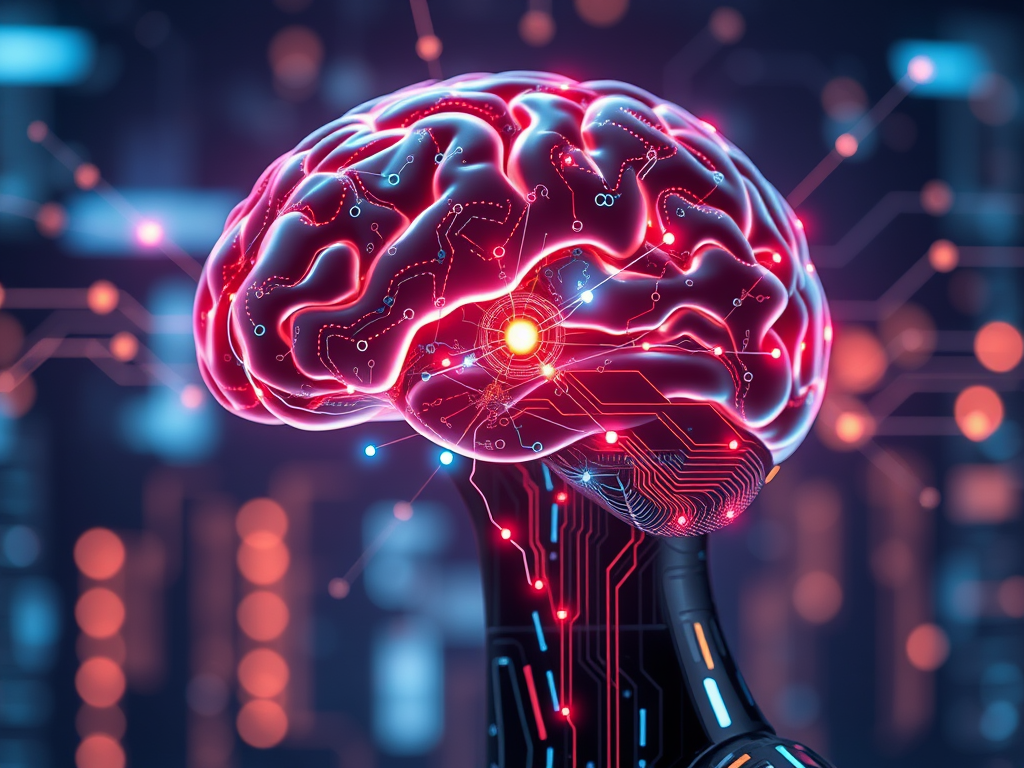
For a long time, the idea of controlling technology with our minds was a staple of science fiction. Today, it’s a rapidly developing reality. Brain-Computer Interfaces (BCIs) are a groundbreaking field that is creating a direct connection between the human brain and external devices. While the technology is still in its early stages, its potential to transform medicine, communication, and even human potential is nothing short of revolutionary.
How BCI’s Work: Reading the Language of the Brain
A BCI system has three core components:
- Signal Acquisition: A device, such as a headset or a surgically implanted chip, records the electrical signals generated by our neurons. These signals are the “language” of our thoughts and intentions.
- Decoding: A computer uses sophisticated algorithms and machine learning to analyze these signals. It learns to recognize specific patterns that correspond to a user’s intent—for example, a particular brainwave pattern for “move cursor left” or “select button.”
- Command Execution: The decoded signal is then translated into a command for an external device, whether that’s a prosthetic limb, a computer cursor, or a video game.
There are two main types of BCIs:
- Invasive BCIs: These require surgery to implant a chip directly into the brain. While this is the most precise method, it carries risks. Companies like Neuralink and Synchron are pioneering these technologies for medical applications.
- Non-Invasive BCIs: These use devices worn on the scalp (like a headset or even a temporary tattoo) to read brain signals. While less precise, they are safer and more accessible for a wider range of uses.
Beyond Medical Applications: The Future is Thought-Driven
While the initial focus of BCIs has been on therapeutic applications—helping people with paralysis control devices or restoring communication for those with locked-in syndrome—the technology is expanding into new and exciting areas.
- Human Enhancement: Some companies are exploring how BCIs can be used to improve memory, enhance cognitive function, or even facilitate direct brain-to-brain communication.
- Gaming and Entertainment: Imagine controlling a video game character with your thoughts or having a virtual reality environment that responds to your emotional state in real-time.
- Education and Productivity: In the future, BCIs could help students focus or provide a seamless interface for hands-free work, allowing for a new level of productivity and efficiency.
Navigating the Ethical Frontier
The rise of BCIs brings with it profound ethical questions. The concepts of “cognitive liberty,” “mental privacy,”and the potential for a new form of digital divide are at the forefront of the conversation. Who owns your brain data? How do we prevent misuse of this technology? These are not just philosophical questions; they are challenges that researchers, policymakers, and the public must address as this technology evolves.
Ultimately, BCIs are not just a technological advancement; they represent a fundamental shift in the relationship between humans and machines. They offer a future where our thoughts can directly shape the world around us, promising a new era of human capability and connection.

Leave a comment