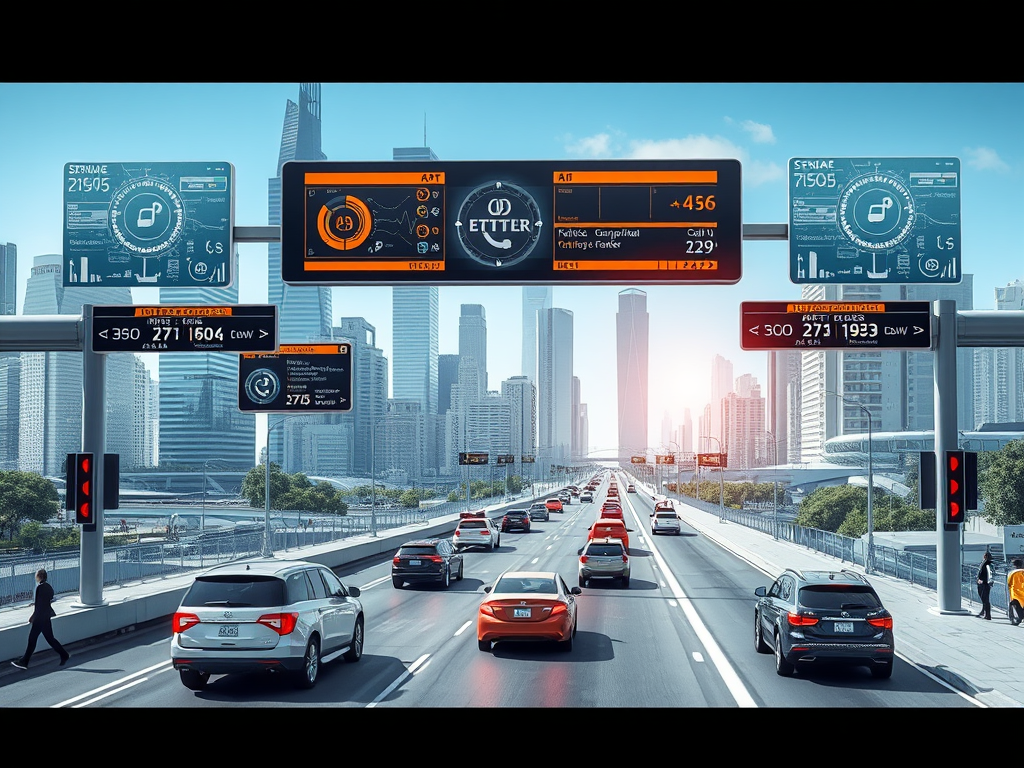
AI is revolutionizing traffic management by transforming outdated, reactive systems into smart, predictive, and proactive networks. Here’s a breakdown of how AI is being used:
1. Intelligent Traffic Signal Control
This is one of the most common and impactful uses of AI in traffic management. Traditional traffic lights operate on fixed timers, which are highly inefficient and a major cause of congestion. AI-powered systems, often called Adaptive Traffic Control Systems (ATCS), change this by:
- Real-time Optimization: Using data from cameras, sensors, and GPS data from vehicles, AI algorithms can “see” the flow of traffic at an intersection. They can then dynamically adjust signal timings in real-time to prioritize high-traffic lanes, minimize wait times, and improve overall flow.
- Learning Patterns: Over time, these AI systems learn recurring traffic patterns—like morning and evening rush hours or a surge of cars before a major sporting event. They can then use this knowledge to proactively adjust signals to prevent congestion before it even begins.
2. Predictive Traffic Modeling and Congestion Management
AI’s ability to analyze vast datasets allows it to predict traffic issues with remarkable accuracy.
- Forecasting Congestion: By analyzing historical traffic data, weather conditions, time of day, and even scheduled events, AI can forecast where and when congestion is likely to occur. This allows city planners to take proactive measures, such as rerouting traffic or deploying more public transit options.
- Emergency Response: In the event of an accident or unexpected road closure, AI can instantly detect the incident and reroute traffic around it, sending real-time alerts to drivers’ navigation apps.
3. Smart Navigation and Route Optimization
You’ve already experienced this in popular apps like Google Maps and Waze. These systems use AI to:
- Analyze Real-Time Data: They collect data from millions of users’ GPS signals to get a comprehensive, real-time picture of traffic on the roads.
- Provide Optimal Routes: The AI algorithms calculate the fastest route to a destination, not just based on distance, but on a combination of live traffic, road closures, and user-reported incidents. This helps to distribute traffic more evenly across a city’s road network, reducing bottlenecks.
4. Improving Safety and Law Enforcement
AI’s visual and analytical capabilities are making roads safer.
- Automated Incident Detection: AI systems, using data from cameras and sensors, can automatically detect accidents, wrong-way drivers, or stalled vehicles. They can instantly alert emergency services, significantly reducing response times.
- Law Enforcement Automation: AI can be used in traffic management systems to automatically detect and issue citations for violations like speeding, running red lights, or not wearing a seatbelt. This automates the enforcement process and helps to prevent accidents.
5. Integration with Autonomous Vehicles
Looking to the future, AI will be the key to integrating autonomous vehicles (AVs) into our transportation networks.
Coordinated Maneuvering: AI could enable vehicles to “platoon,” where they travel in close, fuel-efficient convoys, or execute coordinated maneuvers at intersections, making them safer and more efficient than is possible with human-driven cars.
Vehicle-to-Infrastructure Communication: AVs will be able to communicate with smart traffic lights and other roadside infrastructure, sharing data about their speed and location. This allows the entire system to operate as a cohesive network, further optimizing traffic flow.

Leave a comment