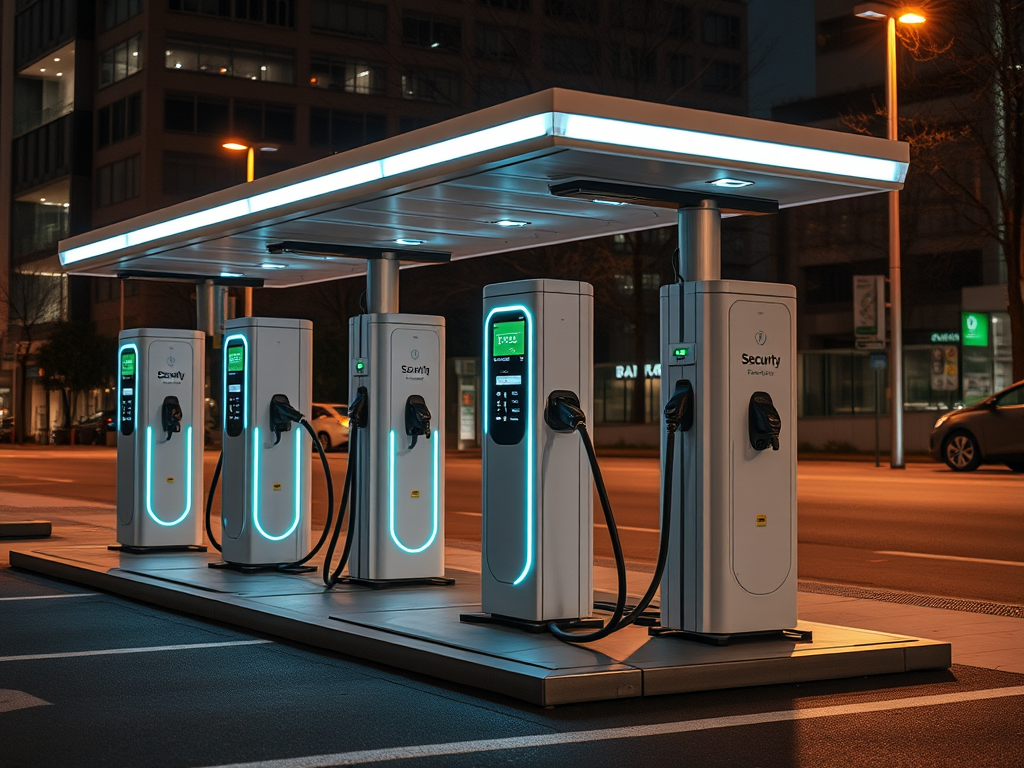
The electric vehicle (EV) charging infrastructure is in a period of rapid evolution, moving beyond simply adding more chargers to building a network that’s faster, smarter, and more reliable. This transformation is crucial to supporting the growing number of EVs on the road and alleviating “range anxiety” for drivers.
Ultra-Fast Charging and Standardization
The race to reduce charging times is a major focus for the industry. New DC (Direct Current) fast chargers are pushing power outputs to 350 kW and beyond. These chargers can add hundreds of miles of range in as little as 10-15 minutes, making long-distance EV travel much more competitive with gasoline-powered cars. To solve the problem of multiple, incompatible charging plugs, the industry is converging on a single standard. The North American Charging Standard (NACS), originally developed by Tesla, is being widely adopted by major automakers and charging networks, which will create a more seamless experience for drivers and a more streamlined path for infrastructure development.
Smart and Integrated Charging
EV chargers are becoming more than just a power outlet; they’re becoming intelligent, networked devices.
- Vehicle-to-Grid (V2G) Technology: This is a major innovation that turns EVs into mobile power sources. V2G allows an EV to not only draw power from the grid but also to send electricity back. 🔋 This can help stabilize the grid during periods of high demand, store surplus energy from renewable sources like solar and wind, and even provide backup power for a home during an outage.
- Smart Charging Solutions: AI-powered software is being used to optimize charging sessions. These systems can “listen” to real-time grid conditions and electricity prices, automatically scheduling a vehicle to charge during off-peak hours when power is cheapest and the grid has more capacity. This smart charging reduces costs for consumers and helps prevent grid overloads.
Convenience and Accessibility Innovations
The industry is working to make charging as effortless as possible.
- Wireless Charging: Inductive charging pads are moving from prototypes to practical applications. These systems allow an EV to charge simply by parking over a pad, eliminating the need for cables. This technology is being tested for both stationary charging in parking lots and for dynamic charging on specially equipped road lanes.
- Reliability and Maintenance: A major complaint from early EV adopters has been the unreliability of public chargers. The industry is addressing this head-on with new diagnostic tools and software that can remotely monitor a charger’s status. This allows operators to detect and fix problems faster, leading to a significant improvement in charger uptime and customer satisfaction.
Security and Durability

As the charging network expands, so do concerns about security and durability.
- Cut-Resistant Cables: Vandalism and cable theft have been a problem for charging networks. Companies are developing new, more durable materials for cables that resist cutting and tampering.
- Tamper-Proof Systems: Chargers are being equipped with new security alarms and systems that can detect and report any signs of tampering or damage, ensuring the safety of both the equipment and the users.

Leave a comment