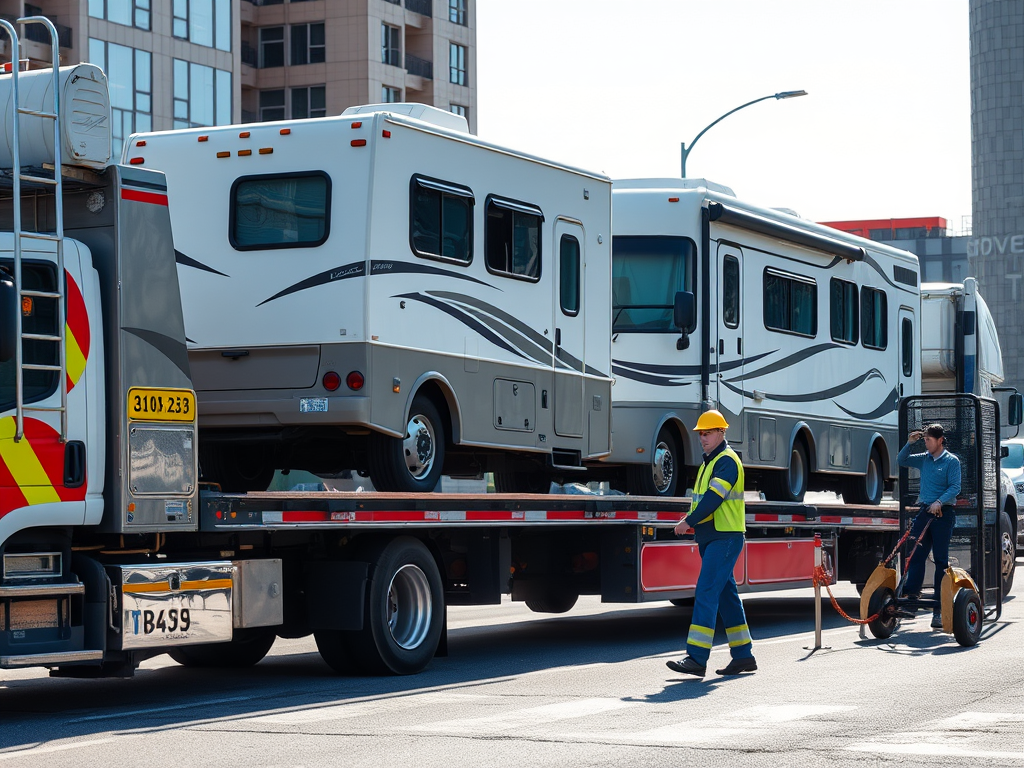
Transporting oversized vehicles, such as large RVs, heavy equipment, or mobile homes, across state lines is a complex process governed by a combination of federal guidelines and strict state-specific regulations.
The legal requirements primarily revolve around obtaining special permits from every state you pass through, ensuring the vehicle is properly marked, and, for extremely large loads, arranging for escort vehicles.
Here are the four core legal requirements for cross-state oversized transport:
1. State-Specific Oversize/Overweight (OS/OW) Permits
This is the most critical and complex requirement. The Federal Government does not issue OS/OW permits; instead, each state’s Department of Transportation (DOT) is responsible for its own roads.
- Permit for Every State: You must obtain a single-trip special hauling permit from every single state the oversized vehicle will travel through.
- Non-Divisible Load Rule: Permits are generally issued only for non-divisible loads—meaning the vehicle or cargo cannot be reasonably dismantled into smaller, legal-sized units in less than eight hours.
- Application Details: The permit application requires exact dimensions (width, height, length) and weight for both the load and the transport vehicle. These permits dictate the approved route, travel times, and any required safety precautions.
| Standard Federal Legal Limits (Approximate) | If vehicle exceeds these, State Permits are required: |
| Max Width | 8′6′′ (102 inches) |
| Max Height | 13′6′′ to 14′0′′ (Varies by state) |
| Max Weight | 80,000 lbs (Gross Vehicle Weight) |
Export to Sheets
2. Required Safety Markings and Equipment
All states require specific markings to ensure the safe passage of oversized loads:
- Warning Signs/Banners: A yellow and black “OVERSIZE LOAD” or “WIDE LOAD” banner must be clearly displayed on the front of the towing vehicle and the rear of the load.
- Flags: Bright-colored (red, orange, or fluorescent) warning flags (usually 18′′×18′′) must be placed on all four extreme corners of the load to mark the widest and longest points.
- Lighting: Special warning lights (flashing or rotating amber/yellow) may be required on the cab or the extremities of the load, especially for approved nighttime travel.
3. Escort/Pilot Vehicle Requirements
For vehicles that exceed certain dimensions, one or more escort vehicles (also called pilot cars) may be legally required to travel with the load. The requirements vary greatly by state:
| Dimension | Typical Requirement |
| Width | Loads over 12′ wide often require one or two escorts. |
| Height | Loads exceeding a certain height may require a pole car (an escort with a measuring pole) to check overhead clearances (bridges, power lines) before the transport vehicle passes. |
| Length | Extremely long vehicles (e.g., over 100′) often require an escort vehicle. |
Export to Sheets
Escort drivers must often be certified and maintain specific communication with the transport driver and local authorities.
4. Travel Time and Route Restrictions
The permits issued by each state will strictly define when and where the oversized vehicle can travel:
- Curfew/Hours of Operation: Most permits prohibit travel during peak traffic hours (e.g., 6:00 AM – 9:00 AM and 3:00 PM – 6:00 PM) and may restrict movement on weekends or major national holidays.
- Approved Route: The state DOT pre-approves a specific route to ensure the load avoids low bridges, unstable roads, weight-restricted highways, or sharp turns that cannot be safely navigated. Deviating from the approved route is a serious violation.
- Temporary Stops: The permit may specify locations (e.g., truck stops) where the load must pull off and park during non-permitted travel hours.
Important Note for Commercial Transport
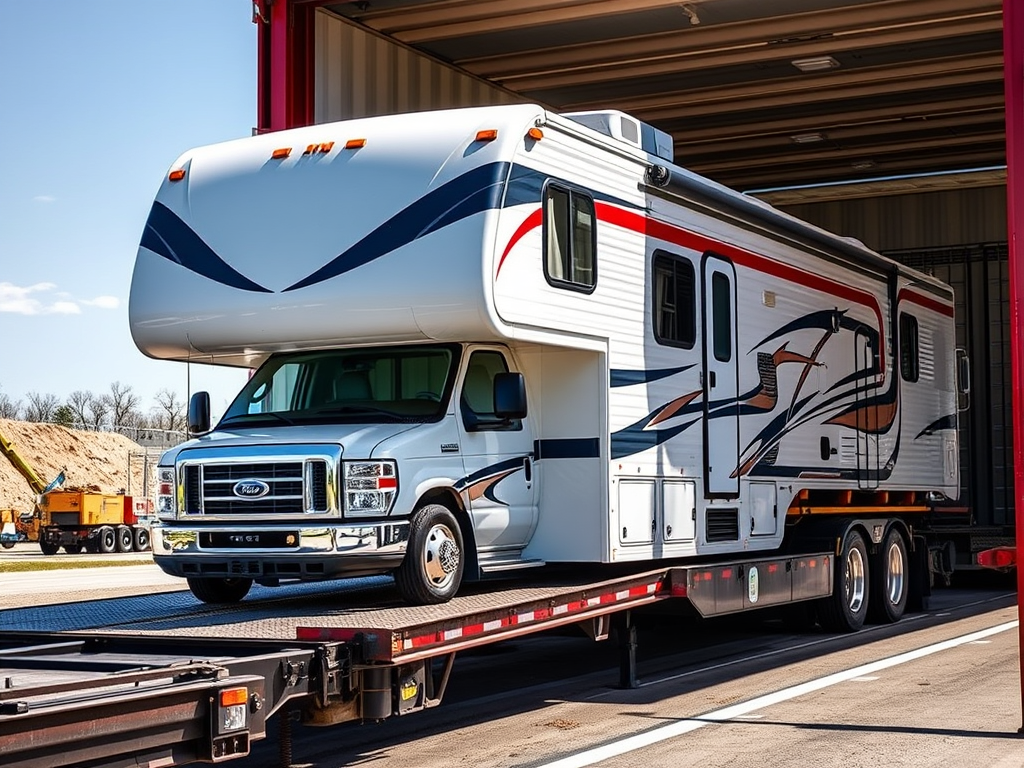
If the transporter is a commercial carrier, they must also comply with federal regulations from the Federal Motor Carrier Safety Administration (FMCSA), which include:
- Commercial Driver’s License (CDL) Requirements (based on vehicle weight).
- Hours of Service (HOS) rules for the driver.
- Insurance and Operating Authority (DOT and MC numbers).

Leave a comment