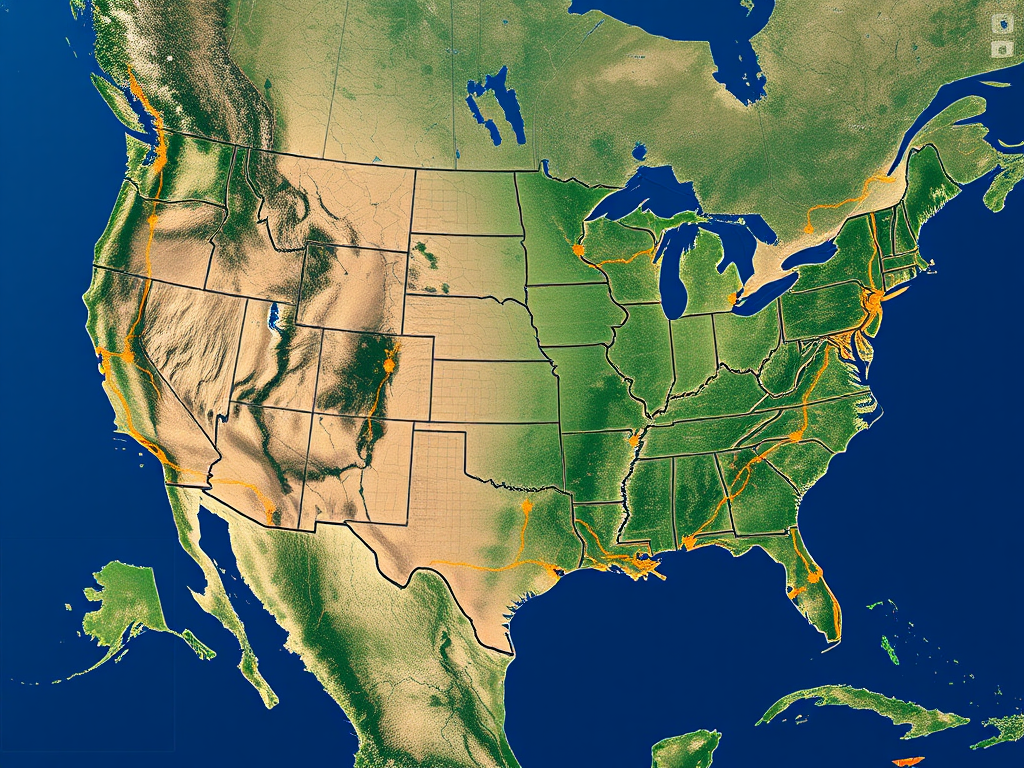
The legal requirements for transporting oversized vehicles are determined by each individual state, as there is no single federal permit that covers intrastate travel.
Therefore, the only way to ensure full compliance is to check with the Department of Transportation (DOT) or the Permit Office of the specific state you are operating in.
However, almost all states follow a similar structure of requirements that cover four main areas:
1. Special Permit Requirements
A special permit from the State DOT is the most critical requirement for any oversized vehicle.
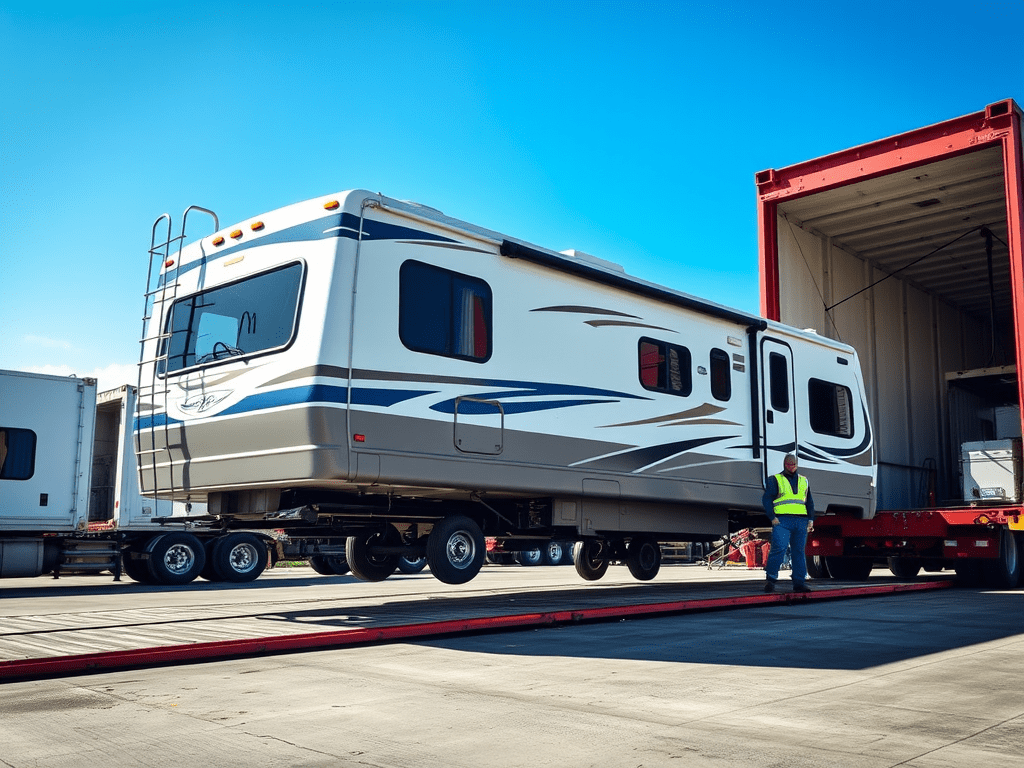
Non-Divisible Loads Only: Permits are generally only issued for non-divisible loads—items that cannot be easily broken down, dismantled, or reduced in size to meet legal limits (e.g., construction beams, large industrial machinery, or a vehicle being towed that is itself oversized).
Legal Maximums: A permit is required if the vehicle’s dimensions or weight exceed the standard legal limits, which are typically:
Width: Usually 8 feet 6 inches (102 inches).
Height: Varies, but commonly between 13 feet 6 inches and 14 feet.Length: Varies significantly by state and vehicle configuration (e.g., single unit, truck-trailer combination).Weight: Generally 80,000 pounds Gross Vehicle Weight (GVW), but this is heavily dependent on the number of axles and spacing (Federal Bridge Formula).
2. Safety & Warning Markings
To alert other drivers, special signage and flags are mandatory for all permitted oversized loads.
Signs/Banners: The vehicle must display a sign with black lettering on a yellow background (typically “OVERSIZE LOAD” or “WIDE LOAD”). These signs must be posted on the front of the towing vehicle and the rear of the load/trailer.
Flags: Brightly colored (red or fluorescent orange) flags (usually 18 inches square) must be securely fastened to the extreme corners or widest points of the load.
Lighting: Additional warning lights (e.g., flashing amber beacons) are often required, especially for night travel or when the load extends significantly beyond the legal dimensions.
3. Escort/Pilot Vehicle Requirements
Depending on how much a vehicle exceeds the legal limits, one or more pilot cars (escort vehicles) may be required.
Escort Vehicle Equipment: Pilot cars must be equipped with two-way radios, flashing lights, and their own “OVERSIZE LOAD” signs. Some states require pilot car operators to have a state-specific certification.
4. Travel Restrictions
Most states impose strict rules to minimize disruption to commuter traffic and ensure safety.
Hours of Operation (Curfew): Travel is often restricted to daylight hours (half-hour before sunrise to half-hour after sunset) for very large loads (e.g., over 14 feet wide).
Most urban areas have commuter curfews (e.g., 6 AM–9 AM and 3 PM–6 PM, Monday–Friday) where even smaller oversized loads are prohibited.
Holiday Bans: Oversized movements are generally banned on major holidays (New Year’s Day, Memorial Day, Independence Day, Labor Day, Thanksgiving, and Christmas) and the weekends surrounding them.
Route Planning: The permit will specify the exact route, which avoids low bridges, unstable roadways, restricted city centers, and areas with heavy construction.
In short: Always start with the relevant state’s DOT website to determine the exact limits, curfews, and equipment needed for your specific vehicle and route.

Leave a comment