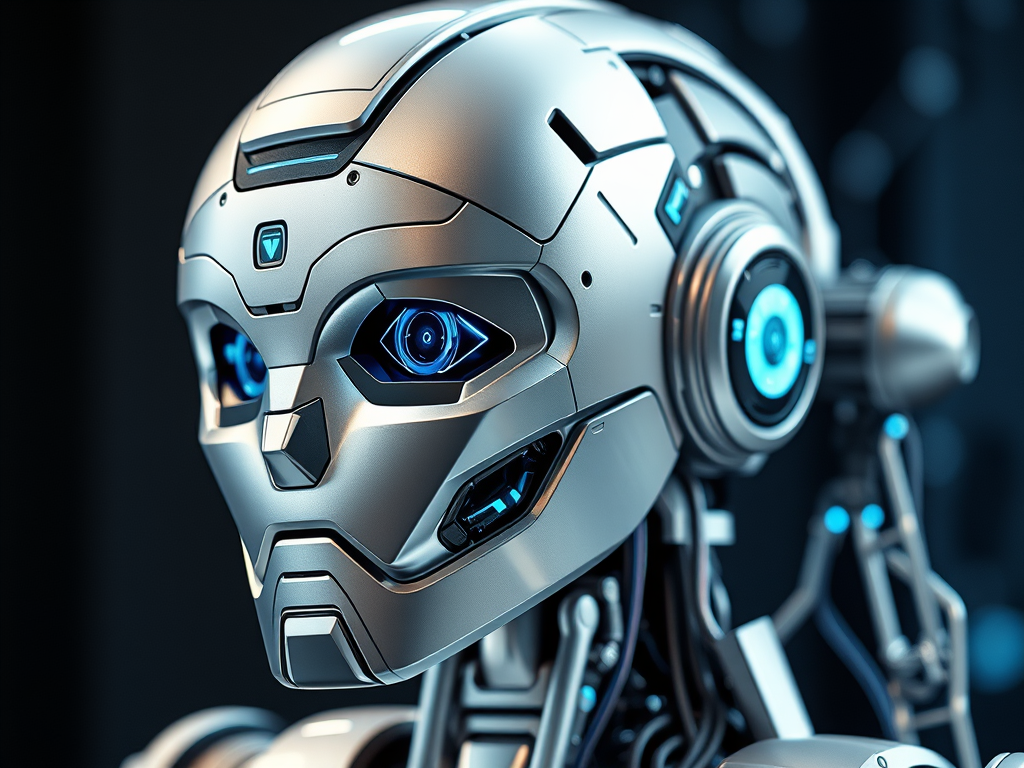
The long-promised era of humanoid robots is no longer science fiction. After decades of research, 2025 is shaping up to be an inflection point where advancements in AI, sensor technology, and mechanical engineering are converging to move humanoids out of the lab and into factories, warehouses, and even homes.
Here’s a look at the most significant news and trends defining the humanoid robotics race right now.
🧠 The Race for the AI “Brain”
The biggest push isn’t just about building a body; it’s about engineering the intelligent mind to control it. The goal is Embodied AI—giving Large Language Models (LLMs) a physical form to ground their intelligence in the real world.
- OpenAI’s Pivot: After quietly shutting down its robotics team years ago, OpenAI is aggressively returning to humanoid robotics with a massive hiring spree. This strategic recalibration aims to overcome the limitations of purely digital models (like GPT-5) by training AI within a physical body, seeing it as a key step toward achieving truly robust Artificial General Intelligence (AGI).
- Google DeepMind’s “Android Play”: Google DeepMind is pursuing a strategy to build an AI operating system, or “brain,” based on its Gemini model that can work “out-of-the-box” across any robot body configuration, humanoid or otherwise. They are focusing on developing the cognitive abilities needed for robots to perform a wide range of tasks and recently introduced an on-device version of Gemini Robotics, allowing robots to operate autonomously without relying on the internet.
🏭 The Industrial & Commercial Deployment Boom
Humanoids are starting their work careers in environments already built for people—factories and logistics centers—where they can directly address labor shortages.
- Logistics Leaders: Companies like Agility Robotics (with their bipedal robot Digit) and Apptronik (with Apollo) are securing major partnerships. Digit is being deployed by Amazon and GXO to handle tote transfer in warehouses, while Apollo is being explored by Mercedes-Benz for various manual tasks in its manufacturing facilities.
- Mass Production Race: The competition is heating up between established tech giants and innovative startups, driven by ambitious production goals:
- Tesla’s Optimus: Elon Musk continues to tout the potential of Optimus to be Tesla’s biggest product, predicting mass production could begin by late 2026.
- Xpeng’s Iron: Tesla’s Chinese rival, Xpeng, is positioning its Iron humanoid as a direct competitor, aiming to start mass production by the end of 2026 and potentially sell 1 million units annually by 2030.Xpeng is differentiating itself by focusing on “human-like behaviors” to increase user comfort and acceptance.
🏡 The Dawn of the Home Companion
A significant trend in 2025 is the push to create affordable, user-friendly humanoids for the domestic market.
- NEO by 1X Technologies: Announced as one of the first humanoids designed specifically for the home, 1X Technologies’ NEO is slated for consumer preorders with an accessible price point, scheduled to ship in 2026.Built with safety in mind, it is engineered to learn and perform household chores through a combination of AI and human teleoperation.
- Figure 03 for the Home: Figure AI’s Figure 03 is also being engineered for high-volume manufacturing and designed for home environments. The latest model features advancements like wireless charging, a completely redesigned vision system for complex navigation, and soft materials to enhance safety and comfort when interacting with people.
📈 Economic and Societal Impact
Analysts project the global humanoid robot market to reach $51 billion by 2035, indicating a rapid shift from prototypes to viable products.
- Cost Reduction: The projected cost for a humanoid robot is expected to fall dramatically from an average of $75,000 in 2025 to just $25,000 by 2035, driven by mass-manufacturing techniques and supply chain scaling.
- Transformative Predictions: Leading figures are making bold claims about the long-term impact:
- Eliminating Poverty: Elon Musk has predicted that AI and humanoid robots will eventually make traditional work “optional,” allow money to become “irrelevant,” and help eliminate global poverty by creating an abundance of goods and services.
- Superhuman Healthcare: Musk also envisions Optimus bringing “superhuman precision” to healthcare, providing universal access to elite medical care through AI-driven surgeons.
The technological race is accelerating, with advancements in dexterity, safety, and AI integration converging to create a future where humanoids are a common sight. The focus has decisively shifted from can robots walk to what useful things can they do at scale.
If you’re interested in seeing one of these new household humanoids in action, check out this video.
The humanoid-robot dystopia arrived early…
This video provides an overview of the new NEO humanoid robot designed for the consumer market, which is a major focus of recent news in the robotics industry.
The humanoid-robot dystopia arrived early…



Leave a comment