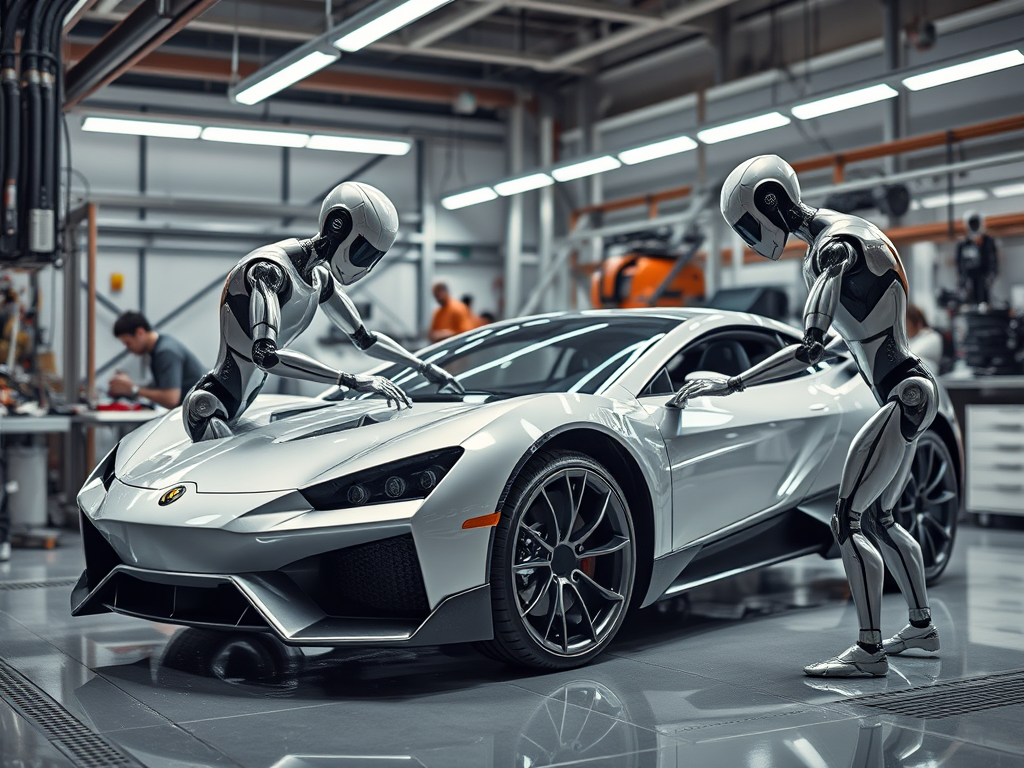
At AAS LLC USA, we see the automotive supply chain from start to finish. We know that a vehicle’s journey begins long before it hits our transport carriers—it starts on the factory floor. The latest breakthroughs in AI-powered humanoid robotics are not just changing how cars are built; they’re radically altering the efficiency, speed, and reliability of the entire manufacturing process.
The most immediate and transformative impact of robots like Figure, Optimus, and Digit is being felt in automotive manufacturing and lineside logistics.
🧠 The Shift from Fixed Automation to Intelligent, Adaptive Robots
For decades, the auto industry relied on large, caged industrial robots. While powerful, these machines were single-task specialists that required factories to be completely redesigned around them.
The new generation of humanoid robots offers a fundamentally different solution: Embodied AI that is designed to operate in spaces built for humans.
- Seamless Integration (Brownfield Automation): Humanoids excel in “brownfield” automation—integrating into existing factory layouts without requiring massive, costly overhauls. They can navigate aisles, open doors, and use the same tools as human workers. This ability to adapt to pre-existing infrastructure means automakers can deploy automation faster and with a lower capital investment.
- Filling Persistent Labor Gaps: The automotive sector worldwide faces critical labor shortages in repetitive, ergonomically challenging, or dangerous tasks. Humanoids are being trialed to fill these roles, performing tasks like:
- Handling heavy or awkwardly shaped components.
- Affixing precise parts, like door seals or vehicle logos.
- Performing quality control checks that require highly consistent movements.
📦 Revolutionizing Lineside Logistics and Kitting
The most powerful application for these general-purpose robots is arguably in lineside logistics—the flow of parts and materials from the warehouse to the assembly line worker. This area is often a bottleneck, relying heavily on manual labor.
- The “Kitting” Process: Humanoid robots are ideally suited for kitting. This involves collecting all the necessary components for a specific assembly step (e.g., everything needed for a door panel) and delivering them to the exact station just when the assembler needs them. This ensures a Just-In-Time (JIT) supply chain right at the point of use.
- Reduced Foot Traffic and Error: By autonomously transporting parts, humanoids reduce the need for humans and specialized carts to constantly move materials around the crowded assembly line. This decreases workplace accidents, minimizes production stops, and reduces the chance of human error (like delivering the wrong part to the wrong station).
- Dynamic Load Handling: Unlike traditional AGVs (Automated Guided Vehicles) that follow fixed routes and carry uniform loads, humanoids can dynamically pick up, place, and carry complex, irregularly shaped loads. Their advanced dexterity and vision systems allow them to safely interact with both objects and human co-workers.
📈 Boosting Throughput and Consistency
The ultimate goal for automotive manufacturers is to increase throughput (the rate at which vehicles move through the line) while simultaneously improving quality consistency.
- 24/7 Operation: Robots don’t need breaks, vacations, or sick days. This potential for uninterrupted 24/7 operation ensures stable, predictable production volumes, which is crucial for meeting consumer demand and optimizing the transport schedules relied upon by AAS LLC USA.
- Quality Consistency: A robot’s movements are programmed for perfect repeatability. When attaching components or applying sealants, humanoids guarantee the same force, angle, and position every single time, leading to a massive reduction in assembly defects and warranty claims.
For the auto transportation industry, a factory running with the efficiency and consistency delivered by humanoid robotics means more predictable pickup times, fewer delays caused by line shutdowns, and ultimately, a more reliable service for moving the finished vehicles to dealers across the nation.
If you’re interested in seeing how these robots are being integrated in real-world factory settings, this video provides excellent context on the future of work: Boston Dynamics: Why the Future is Humanoid Robotics.

Leave a comment