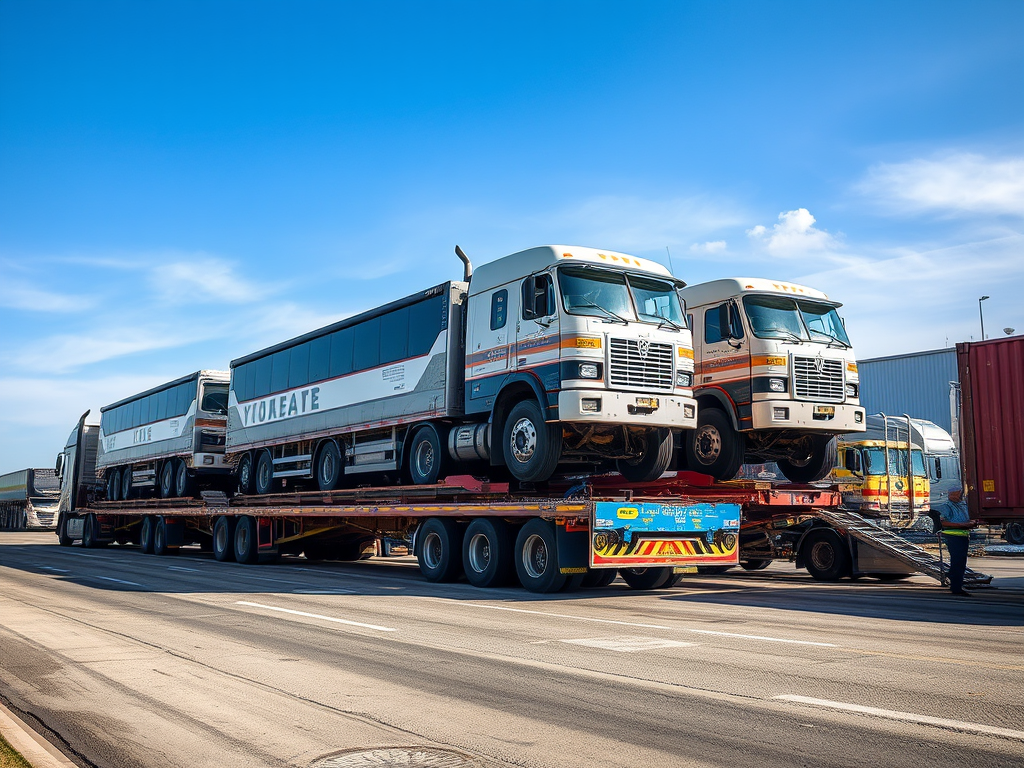
When a vehicle is too wide, too tall, or too heavy for a standard trailer, it enters the world of Oversize Load transport. We aren’t just talking about a lifted truck anymore—this category covers everything from massive construction excavators and mobile homes to industrial generators and agricultural combines.
Shipping these “monsters” isn’t as simple as hitching up and driving. It is a highly regulated logistics operation that requires permits, specialized trailers, and sometimes a mini-convoy of escort vehicles.
What Qualifies as “Oversize”?
While regulations vary slightly from state to state, a vehicle usually triggers “oversize” status if it exceeds these standard dimensions:
- Width: Over 8.5 feet (the standard width of a highway lane).
- Height: Over 13.5 to 14.5 feet (the clearance limit for many overpasses).
- Length: Over 53 to 65 feet for the total combination.
- Weight: Over 80,000 lbs Gross Vehicle Weight.
Pro Tip: Even a standard pickup truck can become “oversize” if you add a massive lift kit, wide aftermarket tires, or a roof-mounted rack that pushes it past legal height or width limits.
The Logistics: More Than Just a Truck
Shipping an oversize load involves three major components that you won’t find in standard car shipping:
1. Specialized Trailers
Standard car haulers can’t handle the weight or height of heavy machinery. Instead, transport companies use:
- Removable Gooseneck (RGN): The front detaches so heavy equipment can be driven directly onto the trailer.
- Lowboys: These sit extremely low to the ground to provide extra overhead clearance for tall loads.
- Step Decks: Trailers with two levels to accommodate different equipment heights.
2. Permits and “Pilot” Cars
You can’t just drive a 12-foot-wide load across state lines without permission.
- Permits: Carriers must pull specific permits for every state the vehicle passes through. These permits dictate the exact route and the times of day the truck is allowed to move.
- Escort Vehicles (Pilot Cars): If a load is exceptionally wide or long, “pilot cars” with yellow flashing lights must lead or follow the truck to warn other drivers and check for low-hanging wires or narrow bridges.
3. Restricted Travel Times
Oversize loads are often restricted to daylight hours only. Many states also prohibit these loads from moving during weekends, holidays, or “rush hour” windows in major cities to prevent massive traffic jams.
What Does It Cost?
Oversize transport is significantly more expensive than standard shipping. You aren’t just paying for fuel; you are paying for:
- Permit Fees: Ranging from $50 to $500+ per state.
- Escort Costs: Often billed per mile (usually $1.50–$2.50 per mile per escort car).
- Specialized Labor: Loading and securing a 40-ton bulldozer is a skilled, multi-hour process.
How to Prepare Your Oversize Vehicle
If you are the one shipping the vehicle, your “to-do” list is critical for safety:
- Know Your Specs: Don’t guess. Provide the exact height, width, length, and weight. Being off by two inches can result in a trailer hitting a bridge.
- Secure the “Extras”: Remove or retract mirrors, antennas, and any loose attachments (like buckets on an excavator).
- Check Ground Clearance: If you’re shipping a low-slung industrial machine, the driver needs to know so they can bring the right ramps.
Planning a heavy haul? I can help you create a “Vehicle Dimension Sheet” that you can hand over to transport companies to ensure you get an accurate, no-surprises quote. Would you like me to do that?

Leave a comment