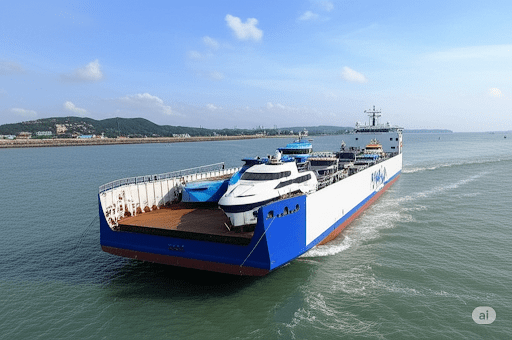
Moving vehicles across waterways might not be the first thing that comes to mind when you think about auto transport, but marine barges offer a robust and often efficient solution for shipping cars, trucks, and other wheeled cargo. Especially for island nations, coastal regions separated by water, or even navigating inland waterways, barges play a crucial role. Let’s dive into the world of marine barge vehicle shipping.
Why Choose a Barge?
For certain situations, using a barge to transport vehicles offers several advantages:
- High Capacity: Barges can carry a significant number of vehicles in a single trip, making them ideal for large-scale shipments.
- Cost-Effective for Bulk Transport: When moving a large volume of vehicles, barge transport can be more economical than other methods.
- Access to Water-Accessible Locations: Barges can reach areas that might be inaccessible by road or rail.
- Reduced Road Congestion: By utilizing waterways, barge transport helps alleviate pressure on roadways.
Loading and Unloading: A Carefully Orchestrated Process
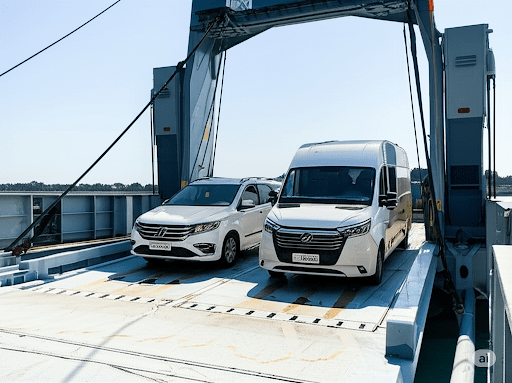
The process of loading and unloading vehicles onto a barge requires precision and expertise. Specialized ramps and securement systems are used to ensure the vehicles are safely transported.
- Roll-on/Roll-off (Ro-Ro): Many vehicle transport barges utilize a “roll-on/roll-off” system. This means vehicles are driven directly onto and off the barge using ramps. This method is efficient for standard cars and trucks.
- Securing the Cargo: Once on board, each vehicle is carefully secured using straps, chains, and other specialized equipment to prevent movement during transit. Experienced stevedores ensure that weight is distributed evenly and that vehicles are protected from potential damage.
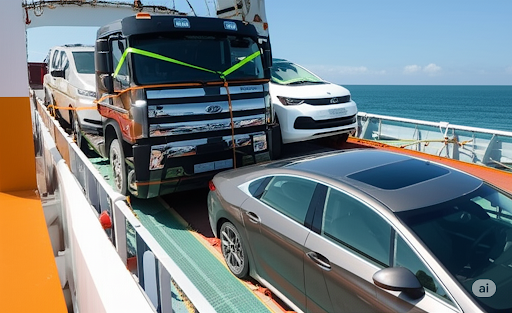
- Unloading: The unloading process mirrors the loading, with vehicles carefully driven off the barge at their destination.
Considerations for Barge Vehicle Shipping
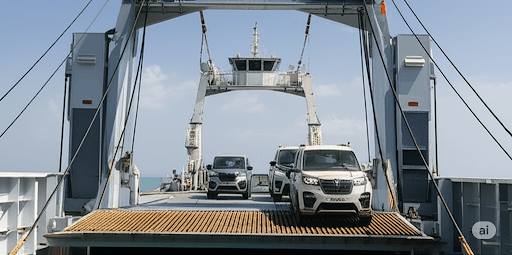
While barge transport offers many benefits, there are also factors to consider:
- Transit Times: Barge transport can sometimes take longer than over-road transport, depending on the distance and waterway conditions.
- Weather Dependency: Barge schedules can be affected by severe weather conditions.
- Port Accessibility: Both the origin and destination must have suitable port facilities to accommodate the barge.
In Conclusion
Marine barge vehicle shipping is a vital part of the global logistics network, offering a reliable and often cost-effective way to move large numbers of vehicles across waterways. From the careful loading and securement to the final unloading, the process is handled by skilled professionals ensuring your vehicles arrive safely at their destination. If you’re looking to transport a significant quantity of vehicles to a water-accessible location, exploring marine barge transport could be the ideal solution.

Leave a comment