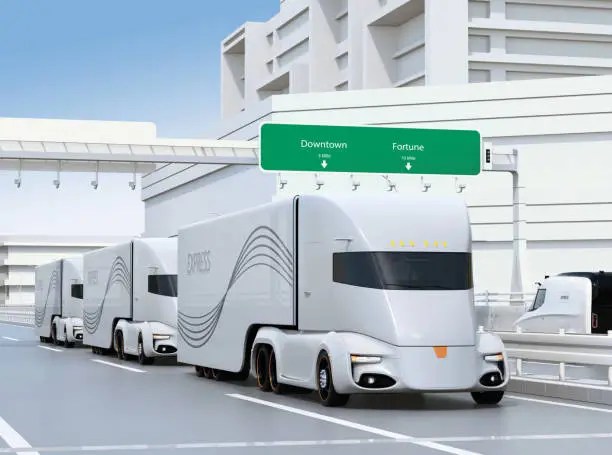
The open road, once the sole domain of human ingenuity behind the wheel, is rapidly evolving. Autonomous highway trucking, once a futuristic concept, is now a tangible reality, poised to revolutionize the logistics industry and, in turn, send ripples through the auto insurance sector. As of August 2025, we’re seeing increasing experimentation and adoption of these vehicles, shifting traditional risk models, forcing new premium pricing strategies, and demanding innovative underwriting practices from insurers.
The Shifting Sands of Risk Models
For decades, commercial auto insurance has been built on a foundation of human driver data – accident history, driving records, and even individual behavior. With autonomous trucks, this entire paradigm is being rewritten. The “critical reason” for most crashes has historically been attributed to human error (a staggering 94%). Autonomous technology aims to dramatically reduce this, leading to a projected 50% drop in insurance costs per mile by 2040, according to Goldman Sachs.
However, the risk doesn’t disappear; it merely shifts. Instead of human fallibility, insurers must now contend with:
- Software and Hardware Malfunctions: Liability can now shift from the driver to the manufacturer or software developer if a system failure causes an accident. This necessitates a deep understanding of complex technology, including sensors, AI algorithms, and redundancy systems.
- Cybersecurity Threats: Connected autonomous trucks are vulnerable to hacking and data breaches, creating entirely new risk exposures that will require specialized cyber insurance coverage.
- Operational Design Domains (ODDs): Autonomous vehicles are designed to operate within specific conditions (e.g., geofenced routes, weather limitations). Insurers will need to understand and price policies based on these ODDs, with tightly geofenced routes potentially commanding more favorable premiums.
- Lack of Historical Data: The limited claims history for self-driving trucks means insurers are in uncharted territory, often having to think more like engineers to predict losses.
The Premium Puzzle: Downward Pressure, Upward Costs?
The promise of reduced accidents due to autonomous technology naturally suggests lower insurance premiums for trucking companies. In the long term, this is likely true. However, the short-to-medium term presents a more complex picture:
- Higher Repair Costs: Autonomous trucks are laden with expensive technology – LiDAR, cameras, advanced computing units – making even minor fender-benders significantly more costly to repair. This can initially keep premiums elevated despite fewer accidents.
- Uncertainty Premium: With limited data on autonomous vehicle safety, insurers may charge a “risk premium” until sufficient evidence proves otherwise.
- Shift in Insured Assets: The insurance “pool” may begin to tilt towards product liability and cyber coverage, moving dollars away from traditional commercial auto policies.
- Usage-Based Insurance (UBI): The granular data collected by autonomous vehicles, such as per-mile or even per-trip data, could pave the way for more dynamic and personalized usage-based insurance models.
Goldman Sachs projects “modest real growth” in overall auto insurance premiums for the next 10-15 years, even as autonomy scales, due to the increasing total number of insured miles and the higher value of the insured autonomous assets.
Underwriting Practices: A Data-Driven Revolution
Traditional underwriting practices, heavily reliant on driver history and loss data, are insufficient for autonomous trucks. Insurers are being forced to:
- Leverage Big Data and AI: Collecting and analyzing vast amounts of data from truck systems (software versions, maintenance records, real-time performance) will be crucial for accurate risk assessment. AI and machine learning will play a pivotal role in processing unstructured data and making faster, smarter underwriting decisions.
- Focus on Product Liability and Cyber Risks: Underwriting will increasingly involve evaluating the reliability of the autonomous driving system itself, leading to a greater emphasis on product liability and cybersecurity coverage.
- Develop Hybrid Policies: As fleets transition, insurers may offer policies that split coverage between human-driven and autonomous modes, or even on-demand coverage for specific autonomous operations.
- Collaborate with Manufacturers: Partnerships between automakers and insurers, bundling AV purchases with specialized coverage, are likely to become more common.
Adaptation Strategies: Incumbents vs. Insurtech Challengers
Both established insurers and agile insurtech companies are grappling with this transformation:
- Incumbents: Large, traditional insurers, while having established market positions and extensive capital, face the challenge of adapting legacy systems and business models. Their strategies include:
- Investing in Insurtech: Many incumbents are actively deploying insurtech applications to enhance their existing operations, improve business processes, and develop new products.
- Strategic Partnerships: Collaborating with autonomous technology developers and manufacturers to gain insights and develop tailored solutions.
- Building New Data Models: Investing in data science capabilities to create new risk models based on autonomous vehicle data.
- Focusing on Enterprise and Commercial Lines: While personal auto insurance might see a decline, the commercial trucking sector offers significant opportunities for new, complex coverage.
- Insurtech Challengers: New entrants, unburdened by legacy infrastructure, are well-positioned to disrupt the market by:
- Leveraging AI and Big Data from the Ground Up: Building entirely new insurance services with innovative product features and personalized offerings.
- Specializing in Niche Risks: Focusing on specific autonomous vehicle-related risks, such as product liability or cyber insurance for AV fleets.
- Agile Product Development: Rapidly developing and iterating on new policy structures and pricing models.
- Emphasizing Customer Experience: Utilizing digital platforms to provide seamless and efficient service.
Market Trends and Projections

The autonomous trucking market is projected to reach $88 billion by 2035, indicating a robust growth trajectory. This expansion will naturally drive demand for specialized insurance products. While widespread fully autonomous adoption is still “a way off,” the gradual rollout of Level 2 and Level 3 automation means insurers have time to adapt.
We can expect:
- Increased focus on commercial AV policies: Especially in regions with extensive highway networks suitable for long-haul autonomous operations, like Texas.
- Evolving regulatory frameworks: Governments are actively working on regulations, liability caps, and insurance coverage requirements, which will provide clearer guidelines for the industry.
- Growth in data-driven insurance: Telematics and real-time data will become standard for pricing and claims management.
- A shift in the workforce: While autonomous trucks could reduce the need for long-haul drivers, potentially impacting workers’ compensation premiums, new jobs will emerge in areas like remote monitoring, maintenance, and data analysis.
The Road Ahead

The integration of autonomous highway trucking into the logistics ecosystem represents a monumental shift for the auto insurance industry. While the core mission of managing risk remains, the nature of that risk, and the methods for assessing and pricing it, are undergoing a fundamental transformation. Success for insurers will hinge on their ability to embrace data-driven innovation, adapt their risk models, and develop flexible, comprehensive coverage solutions that meet the unique demands of this automated future. The journey is complex, but the destination promises a safer, more efficient, and ultimately, a reimagined landscape for commercial auto insurance.

Leave a comment