Moving a vehicle across town, across state lines, or across the country doesn’t have to mean putting hundreds of miles on your odometer or stressing about the safest method. At AAS LLC, we offer both drive-away services and open carrier transport, giving customers flexible, reliable options tailored to their specific needs. But which one should you choose?
This unbiased comparison breaks down how each service works, their key differences, pros and cons, and real-world scenarios where one clearly outperforms the other—so you can make an informed decision with confidence.
What Is a Drive-Away Service?
A drive-away service (sometimes called “driveaway”) is exactly what it sounds like: a licensed, professional driver gets behind the wheel of your vehicle and drives it directly to the destination. The car travels under its own power on public roads, just as if you were making the trip yourself—except a vetted professional is doing the driving.
This method is popular for its simplicity and speed. Pickup and delivery are typically door-to-door, with flexible routing options. Drivers are background-checked, insured, and often experienced in long-haul relocations.

Our Culture
What Is Open Carrier Transport?
Open carrier transport is the classic “car hauler” method you see on highways every day. Your vehicle is professionally loaded onto a large, multi-level open trailer pulled by a semi-truck. The trailer can carry 8–10 vehicles at once, and your car is securely strapped down for the journey.
The vehicle is not driven—it rides as cargo. This means zero additional miles on the odometer and no engine or drivetrain stress during transit. Open carriers are the most common form of professional auto transport in the U.S. because of their efficiency and nationwide availability.
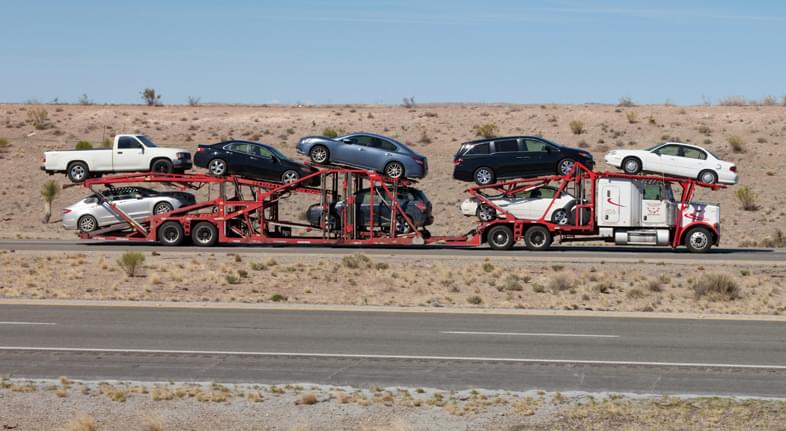
Open Carrier Car Shipping | RoadRunner Auto Transport
Side-by-Side Comparison: Drive-Away vs. Open Carrier
| Aspect | Drive-Away Service | Open Carrier Transport |
|---|---|---|
| How it works | Professional driver drives your car | Vehicle loaded on open trailer & hauled |
| Cost | Usually lower upfront (often $0.50–$1.00 per mile) | Higher than drive-away but competitive for long hauls |
| Delivery Speed | Faster—direct route, minimal waiting | Slightly longer (routing & loading/unloading) |
| Mileage Added | Full trip distance added to odometer | Zero additional miles |
| Vehicle Wear | Normal road wear, engine use, fatigue | Minimal mechanical stress |
| Protection | Full road exposure (weather, traffic) | Secured but exposed to elements & debris |
| Best for | Operable vehicles, flexible needs | Any vehicle (running or not), long distances |
| Personal Items | Allowed (within reason) | Usually not permitted in vehicle |
| Scheduling | Highly flexible | Good availability but more structured |
Pros and Cons of Each Service
Drive-Away Services Pros:
- Often the most budget-friendly option upfront
- Faster door-to-door delivery with direct routing
- Flexible—custom stops, personal items OK, easier for remote locations
- Personalized service with one dedicated driver
Cons:
- Adds full mileage and normal driving wear/tear
- Vehicle experiences all road conditions (weather, traffic risks)
- Not suitable for inoperable, classic, or high-value exotic vehicles
- Driver rest requirements can affect ultra-long hauls
Open Carrier Transport Pros:
- No added miles or mechanical wear—your car arrives exactly as shipped
- Handles non-running vehicles easily
- Professional loading/unloading with secure tie-downs
- Excellent for long-distance moves and standard daily drivers
Cons:
- Typically costs more than drive-away
- Vehicles exposed to weather, dust, and road debris (though far less driving stress)
- Slightly longer transit times due to multi-vehicle routing
- No personal items allowed inside the vehicle
When to Choose Drive-Away vs. Open Carrier
Choose Drive-Away if:
- You want the lowest possible upfront cost
- Speed and flexibility matter most (tight deadlines, specific routes)
- Your vehicle is reliable, operable, and you’re comfortable adding mileage
- You need to ship personal belongings inside the car
- The distance is shorter to medium-range
Choose Open Carrier Transport if:
- You want to preserve your vehicle’s mileage and mechanical condition
- You’re shipping a non-running, classic, luxury, or high-value car (or prefer maximum protection from driving stress)
- The move is long-distance and you prioritize “set it and forget it” logistics
- Weather or road conditions are a concern but you don’t need full enclosure
Pro Tip: For ultra-high-value, classic, or brand-new vehicles, many customers upgrade from open carrier to enclosed transport for even greater protection—something we also offer alongside both options.
The Bottom Line: There’s No One-Size-Fits-All Answer
Both drive-away services and open carrier transport are safe, proven methods used thousands of times every month. Drive-away wins on cost and speed; open carrier wins on vehicle preservation and peace of mind. The right choice depends on your budget, timeline, vehicle type, and priorities.
At AAS LLC, we don’t push one over the other—we help you pick the service that makes the most sense for your situation. Our team provides transparent quotes, real-time tracking, and full insurance coverage for both options.
Ready to move your vehicle? Contact AAS LLC today for a free, no-obligation car-shipping-cost-check. Tell us your pickup/drop-off locations, vehicle details, and timeline, and we’ll recommend the best option (or even a custom hybrid solution) that fits your needs perfectly.
Safe travels—your car will get there, the smart way.

Leave a comment