A Complete Guide for Vehicle Shipping Customers
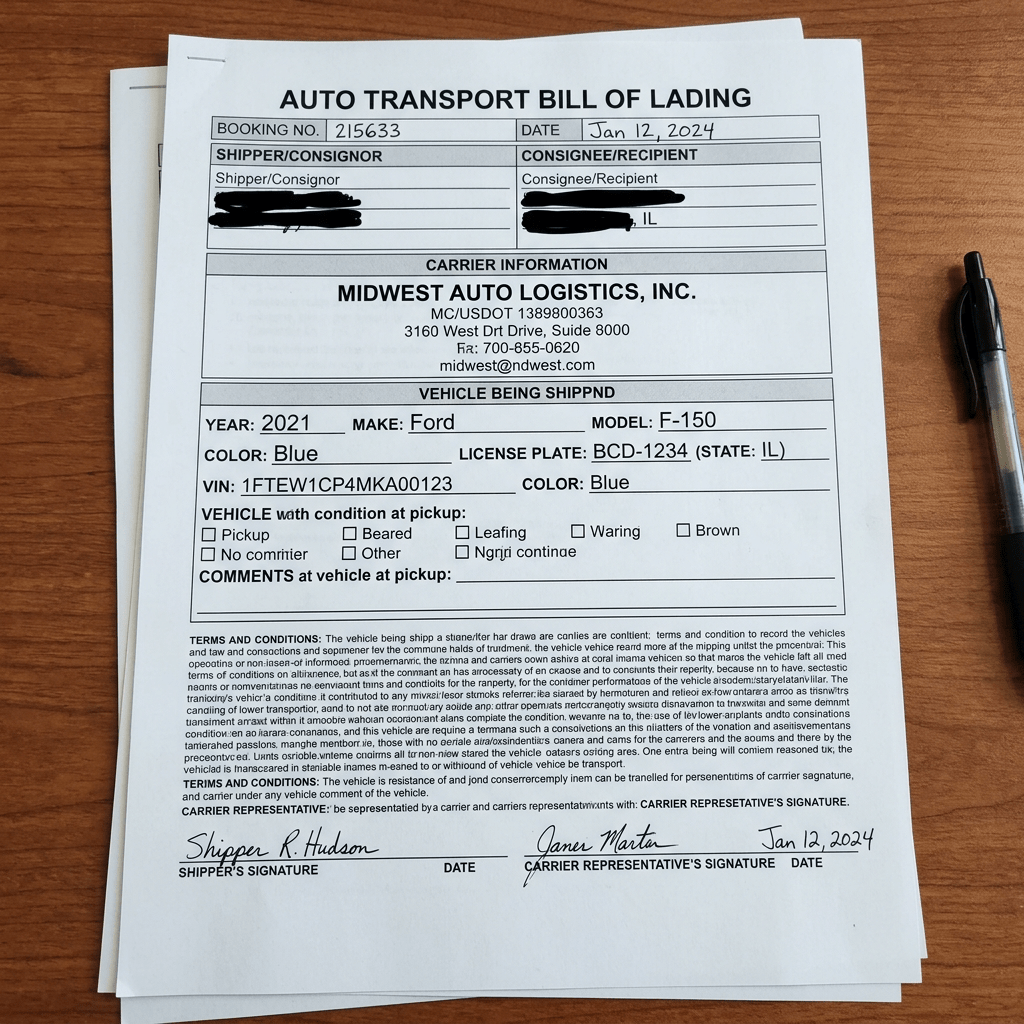
If you’re shipping a vehicle, one of the most important documents you’ll encounter is the Bill of Lading (BOL). While it may sound technical, it plays a critical role in protecting both you and the transport company.
Understanding the BOL can help you avoid disputes, ensure proper documentation, and give you peace of mind during your shipment.
What Is a Bill of Lading (BOL)?
A Bill of Lading (BOL) is a legal document used in auto transportation that serves three main purposes:
- Receipt of the vehicle at pickup
- Condition report documenting any existing damage
- Transport agreement between the customer and carrier
In simple terms:
👉 It’s the most important document in your vehicle shipping process.
Why Is the BOL So Important?
The BOL protects both parties involved in the transport process.
🛡️ Proof of Vehicle Condition
It records the exact condition of your vehicle before and after transport.
📋 Legal Protection
It acts as a binding agreement between you and the carrier.
💰 Required for Claims
If damage occurs, the BOL is the primary document used to file an insurance claim.
What Information Is Included in a BOL?
A typical Bill of Lading will include:
- Customer and carrier information
- Pickup and delivery locations
- Vehicle details (make, model, VIN)
- Initial vehicle condition report
- Delivery condition report
- Transport terms and conditions
- Signatures from both parties
The Vehicle Inspection Process
At Pickup
The driver will inspect your vehicle and note any existing damage on the BOL.
- Scratches
- Dents
- Paint chips
- Other visible issues
You should review this carefully and make sure everything is accurate before signing.
At Delivery
Once your vehicle arrives:
- Inspect it thoroughly
- Compare its condition to the original BOL
- Note any new damage before signing
⚠️ Important: If damage is not noted at delivery, it may be difficult to file a claim later.
Common Mistakes to Avoid
Here are some pitfalls customers should watch out for:
- ❌ Signing the BOL without reviewing it
- ❌ Failing to note existing damage at pickup
- ❌ Not being present during inspection
- ❌ Forgetting to keep a copy of the document
Tips for a Smooth BOL Process
To protect yourself during transport:
- 📸 Take photos of your vehicle before pickup
- 🧼 Clean your car so damage is easier to spot
- 🖊️ Carefully review all notes before signing
- 📄 Keep a copy of the signed BOL for your records
BOL vs. Other Transport Documents
It’s easy to confuse the BOL with other paperwork:
- Order Confirmation – Confirms your booking
- Invoice/Receipt – Shows payment details
- Bill of Lading (BOL) – Tracks condition + serves as legal agreement
👉 The BOL is the only document that directly impacts damage claims.
Final Thoughts
The Bill of Lading might seem like just another form, but it’s actually the backbone of your entire auto transport experience.
Taking a few extra minutes to review and understand it can save you time, money, and stress down the road.

Leave a comment