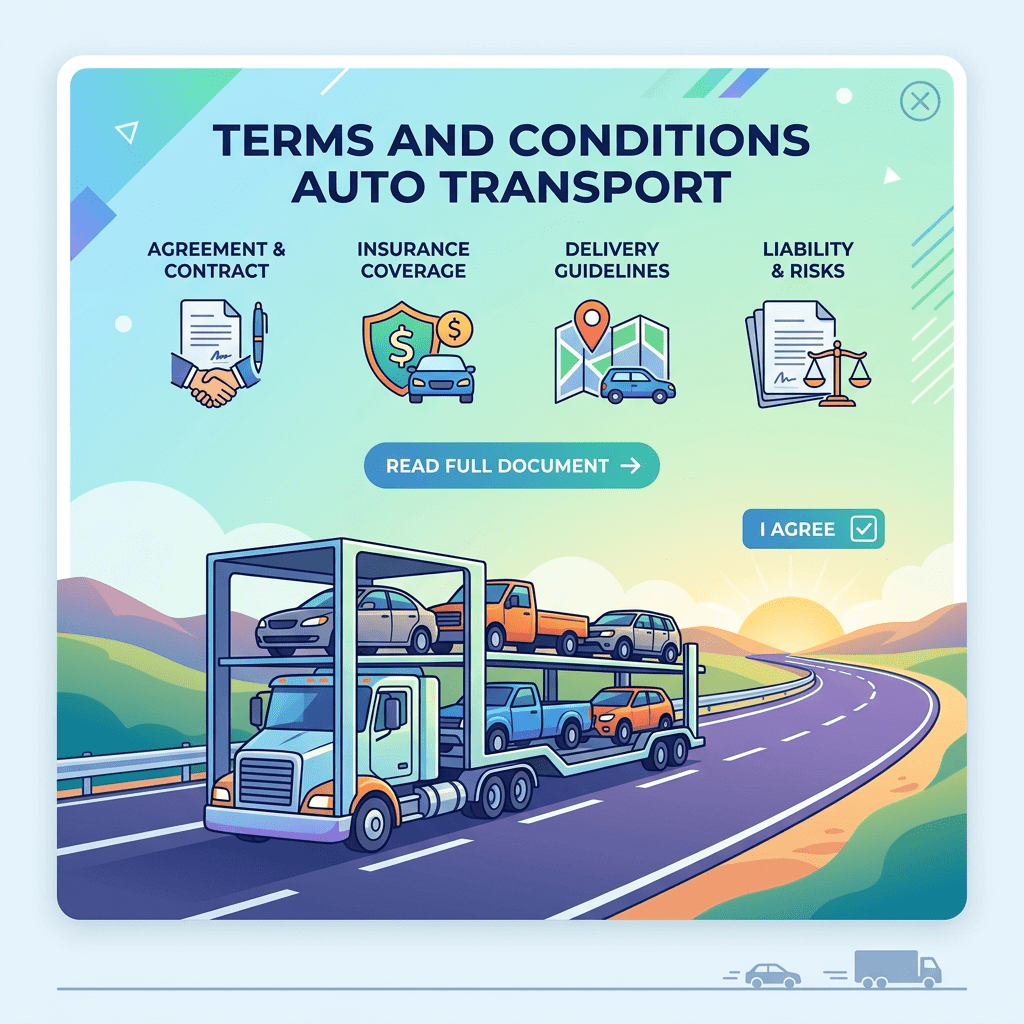
A Complete Guide for Customers
When shipping a vehicle, understanding the terms and conditions is just as important as choosing the right carrier. These guidelines protect both the customer and the auto transport company, ensuring a smooth and transparent process from pickup to delivery.
Below is a breakdown of standard terms and conditions commonly used in the auto transportation industry.
1. Service Overview
Auto transportation services involve the pickup, transport, and delivery of vehicles using open or enclosed carriers. By booking a shipment, the customer agrees to the terms outlined by the carrier or broker handling the transport.
2. Booking and Payment Terms
Customers must provide accurate details about their vehicle, including make, model, condition, and pickup/delivery locations.
- A deposit may be required at the time of booking
- Remaining balance is typically due upon delivery (COD)
- Accepted payment methods may include credit card, debit card, or certified funds
Failure to make payments as agreed may result in delays or cancellation of service.
3. Vehicle Condition and Inspection
Before transport, a vehicle inspection report (Bill of Lading) is completed at pickup and delivery.
- Customers should ensure the vehicle is clean for accurate inspection
- Existing damage must be documented before transport
- The same report is used to verify the vehicle’s condition upon delivery
4. Personal Items Policy
Most carriers prohibit or limit personal belongings inside the vehicle.
- If allowed, items must typically not exceed 100 lbs
- Personal items are not insured under carrier cargo insurance
- Loose items may shift during transport and cause damage
5. Pickup and Delivery Windows
Auto transport operates on estimated windows, not guaranteed times.
- Pickup and delivery dates are estimates, not exact appointments
- Delays may occur due to weather, traffic, mechanical issues, or route changes
- Customers or authorized representatives must be available for release and receipt of the vehicle
6. Insurance Coverage
Licensed carriers provide cargo insurance during transport.
- Coverage applies to damages caused during transit
- Pre-existing damage is not covered
- Claims must be noted on the Bill of Lading at delivery
Customers may request a copy of the carrier’s insurance policy before shipment.
7. Cancellation Policy
Cancellation terms vary but typically include:
- No fee if canceled before carrier assignment
- Partial or full fee if canceled after dispatch
- Refund policies depend on timing and service stage
8. Delays and Liability
While every effort is made to meet timelines, carriers are not responsible for delays caused by:
- Weather conditions
- Road closures or traffic
- Mechanical breakdowns
- Acts of nature or unforeseen events
9. Vehicle Preparation Requirements
To ensure safe transport, customers should:
- Remove all personal items
- Disable alarms
- Leave about 1/4 tank of fuel
- Ensure the vehicle is operable (unless otherwise arranged)
Non-operable vehicles must be disclosed in advance.
10. Customer Responsibilities
Customers are responsible for:
- Providing accurate contact information
- Being available during pickup and delivery
- Reviewing and signing required documents
- Notifying the company of any changes
11. Dispute Resolution
Any disputes should first be addressed directly with the transport company. If unresolved, they may be handled through:
- Mediation or arbitration
- Applicable state or federal regulations
12. Final Agreement
By booking auto transport services, the customer acknowledges and agrees to all terms and conditions provided by the carrier or broker.
Final Thoughts
Understanding these terms helps avoid surprises and ensures a smooth shipping experience. Always read your contract carefully and ask questions before confirming your booking.

Leave a comment