

Tesla Semi vs. Diesel Trucks: Is Electric Trucking Ready for the Long Haul?
Diesel engines have powered American freight transportation for generations. Now electric trucks are challenging one of the most familiar machines on the highway. But can an electric semi actually compete when the road stretches hundreds of miles?
Picture two trucks leaving Los Angeles on a delivery run toward Seattle.
One is powered by a diesel engine, a machine built around a century of mechanical refinement and a nationwide fueling network.
The other is a Tesla Semi, powered by electric motors and a massive battery system.
Both drivers have cargo to deliver. Both face traffic, mountain grades, weather, and delivery schedules.
But their journeys could look very different.
And that’s what makes the debate between electric and diesel trucking so fascinating.
Diesel Has One Enormous Advantage: Experience
Modern diesel trucks are the product of decades of engineering and real-world testing.
Fleet operators understand their capabilities. Drivers know what to expect. Mechanics are familiar with their maintenance needs.
Most importantly, diesel trucks operate within an enormous established infrastructure.
Fuel stations, repair shops, parts suppliers, and experienced technicians are available across major freight corridors.
For long-distance trucking, that infrastructure matters enormously.
A truck that can travel a long distance is valuable.
A truck that can reliably refuel, get repaired, and return to service across the country is even more valuable.
Electric trucks must compete with that entire system—not merely with the engine under the hood.
Tesla’s Different Approach

Tesla designed its Semi around electric propulsion rather than adapting a conventional diesel drivetrain.
According to Tesla’s published specifications, its long-range Semi is designed for an estimated range of approximately 500 miles under specified conditions, while a standard-range version is rated at approximately 325 miles.
Tesla also lists estimated energy consumption of approximately 1.7 kilowatt-hours per mile.
Those figures are meaningful, but they’re not guarantees for every trip.
Real-world range can vary with speed, cargo weight, terrain, temperature, weather, and operating conditions.
A truck climbing through mountainous terrain on a cold day faces a different challenge from one traveling across a flat highway in mild weather.
That’s why published specifications are the beginning of the conversation—not the end.
What Happens on a Route Like Los Angeles to Seattle?
The Interstate 5 corridor provides a fascinating example.
A driver traveling between Southern California and the Pacific Northwest encounters major metropolitan areas, long stretches of highway, and significant changes in terrain.
The journey also includes mountain grades where truck performance and energy management become especially important.
For a diesel truck, the primary planning questions involve fuel, driver hours, traffic, road conditions, and delivery timing.
An electric truck must consider all those factors plus charging availability and compatibility.
It isn’t enough to know that a truck can theoretically travel hundreds of miles on a charge.
The operator needs to know where suitable high-power charging equipment exists, whether it is accessible, how long charging will take, and how charging fits into the driver’s schedule.
A route that works well for an electric truck with charging at its terminals may be far more difficult for another operator without that infrastructure.
Electric Motors Have Their Own Advantages
Diesel engines are powerful, but electric motors deliver torque differently.
Electric drivetrains can provide strong, immediate response, which can be useful when accelerating heavy loads.
Regenerative braking is another interesting advantage.
When slowing down or descending certain grades, an electric truck can recover some kinetic energy and return it to the battery.
That doesn’t create free energy, and it doesn’t eliminate the need for conventional braking systems.
But it offers an opportunity to recover energy that traditional vehicles often dissipate as heat.
Electric trucks also eliminate tailpipe exhaust emissions during operation.
Their overall environmental impact still depends on electricity generation, battery manufacturing, vehicle production, and lifetime use.
The Question Nobody Can Ignore: Charging
Charging is arguably the central challenge in scaling long-distance electric trucking.
Passenger cars can use a growing network of public chargers, but a fully loaded commercial semi has very different requirements.
The charging equipment must deliver substantial power and accommodate the physical size of the vehicle and trailer.
Tesla has been developing its Megacharger network to support the Semi.
Yet a network being developed is not the same as universally available infrastructure.
For many fleets, the most practical early applications may be predictable routes with dependable charging facilities at depots or along established corridors.
Long-distance flexibility will improve only as infrastructure expands.
What About Operating Costs?
Electric trucks have fewer conventional engine-related components.
They don’t require diesel engine oil changes, exhaust aftertreatment systems, or many of the maintenance tasks associated with combustion engines.
Electricity may also cost less per mile than diesel under favorable conditions.
However, a realistic cost comparison must consider more than fuel and routine maintenance.
Purchase price, financing, charging equipment, electricity demand charges, downtime, battery life, payload, utilization, and resale value all affect the economics.
An electric truck that saves money on energy but spends too much time waiting for charging may not be the best choice for every operation.
Likewise, a fleet running predictable daily routes with dedicated charging may discover substantial advantages.
The right answer depends on the work.
Could Electric Trucks Eventually Transport Electric Cars?
Absolutely—and that possibility is particularly interesting.
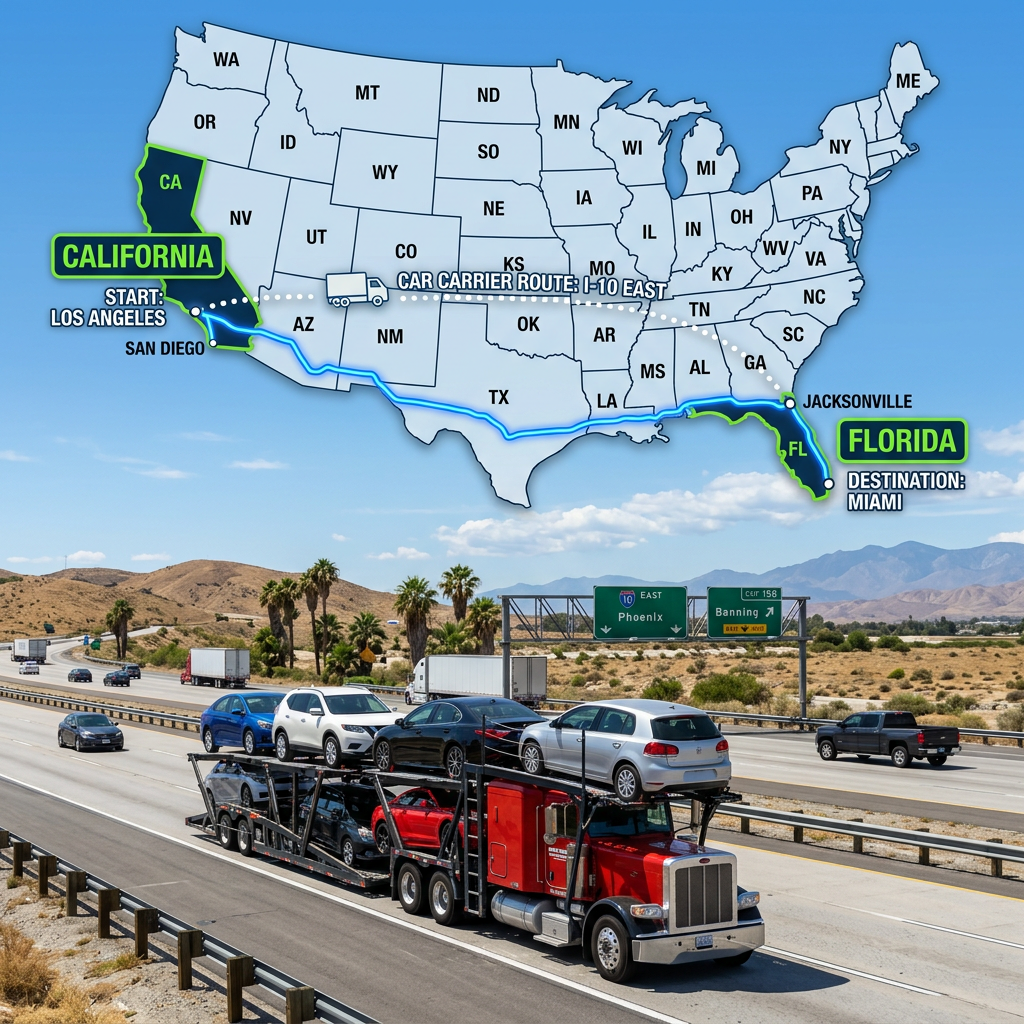
Electric vehicles already travel around the country on conventional auto transport equipment.
As electric commercial trucking develops, more vehicle movements could eventually involve electric-powered tractors.
But there’s an important distinction between an electric tractor pulling freight and a tractor specifically configured for automobile transport.
Auto transport trailers have unique loading, clearance, weight-distribution, and equipment requirements.
An electric truck still needs to be compatible with the actual transportation job.
For readers interested in moving a Tesla or another electric vehicle between states, there’s a separate practical question: how to arrange safe vehicle transportation.
Related resource: Allstates Auto Shipping offers information about electric vehicle transport and quote requests through its dedicated EV shipping service page.
Will Diesel Disappear?
Probably not overnight—and perhaps not for a very long time.
The trucking industry serves an extraordinary variety of needs.
Some trucks travel predictable regional routes. Others cross the country. Some haul lightweight freight, while others handle unusually heavy or specialized loads.
Electric propulsion may become highly competitive in certain applications before others.
Diesel will continue to benefit from its mature infrastructure and operating flexibility, while electric trucks may gain ground as charging technology, battery systems, and fleet experience improve.
The most interesting future may not be a sudden victory for either technology.
It may be an industry where different powertrains serve different jobs.
The Real Competition Is Just Beginning
The Tesla Semi is more than a new truck design.
It represents a challenge to assumptions about how heavy freight must move.
But diesel trucks aren’t standing still, either. Manufacturers continue improving efficiency, reliability, and emissions performance.
The ultimate winner won’t be determined by online arguments or impressive acceleration videos.
It will be determined by what happens when trucks are loaded, dispatched, driven, maintained, and expected to deliver on time.
Because in trucking, the future doesn’t win by looking impressive. It wins by getting the load delivered.







Leave a Reply